Persona, SCA Life, Vinegar

Making a Vinegrier – repris

As Pennsic approaches, it is time to put up or shut up.

After a long conversation with Gunnar and Lucretia, I have a plan. I have registered to be at the A&S display on Sunday, August 7 with the poster, barrels, wheelbarrow, and vinegars. I have been encouraged to bring as much “special” vinegar as I can.


Then on Monday afternoon, I will wheel the barrow throughout Pennsic, visiting the Royal Encampments but then anyone and everyone else. I will be “hocking” my vinegar. I cannot legally sell it and none of you have ha’pennies anyway 🙂 I will have 40L of barrel-aged Pinot Noir vinegar. That should be plenty. Please (and Gertie begs you) take some. Marinate your meats in it, make dressings, make shrubs, whatever.


Hopefully, Gunnar and others will be able to take photos and video of the experience. The idea is to show how vinegar was sold in late period. I will have handouts as well to help explain what is going on. I am going to try to be in character but that doesn’t always go over well in the SCA.

Now for the question that is in my mind: why the heck am I doing this? I don’t know, really. The SCA wants to recreate the medieval period, at least the “good” parts. Once I found the woodcut showing a vinegar merchant, I wanted to do this. I wanted to make for a brief period that specific experience happen again. And our tent city of Pennsic feels like the perfect place for it.

See you there.

SCA Life, Vinegar

History of Vinegar paper

Ok. Some of you have asked for it so here it is.

History of Vinegar

You can also find it in my class notes are from the main page.

A few notes though. It is a pretty short paper, all things considered. The reason being that serious research on what vinegar is, how it can be made, and how to optimize the process doesn’t happen until after 1600. The bulk of it doesn’t happen until it is understood that it is a bacteria making the vinegar. So in period, vinegar is important but much like today, it is not exciting. Everyone knows you can just leave wine or ale out and vinegar will form. So it is not worth spending a lot of time writing about it.

While I have spend some time doing academic research on vinegar, it is not my focus. If I had a lot more time, then yes, I could deep dive into academic journals and cross-reference across a variety of sources to dig up all that Classical and Medieval people knew about vinegar. But that still wouldn’t be my focus. My focus is making vinegar and making it in a close to medieval way so we can have a more authentic experience. It turns out that surface methods are what most people used to make vinegar. So rather than having our feast stewards and brewers buy mass produced vinegar on a tight budget, I can provide a better product and cheaper (because it is free). That is my focus.

So enjoy!

SCA Life, Vinegar

Vinegar – what is next?

As the weather warms, and events open, I find myself thinking, what is next?

I have to write a paper to pull my research and experiments into one place. I need to make some new clothes. But after that, I think it is time to try to make oriental vinegars.

I have pretty much succeeded in making European vinegars. I have made a wide variety of wine vinegars. I have made malt vinegars. I have made mead vinegars. I have made cider vinegars. I have made aged vinegars. I have made vinegar from coconut water. I have mostly made balsamic vinegar (or at least as close as I can get without rare woods and the caves of Modena).

Oriental vinegars don’t start directly with sugar. They start with starch. Rice, barley, pea, and millet.

The next step is then to make sake. I have made vinegar from commercial sake and rice wines but time to make my own. Then apply that process to converting the starches in oriental grains to make something like Chinese Black vinegar. Just as balsamic was the end goal for European vinegars, Chinese Black vinegar is the goal on the oriental side of things. This might take several more years as my drive and time allow.

Persona, SCA Life, Vinegar

Why am I doing what I do?

So I have gotten a lot of new readers to this blog, or at least more vocal ones  I don’t know if I ever stated what I am actually doing in SCA A&S, you know, the actual why I am doing. It might be buried in earlier posts. Either way, it is worth restating as I might have changed scope since then.

I also want to preface that in no way is the following a direct result of my conversations over the past weekend (10-16-21) and further. Those conversations got me thinking about this topic, but it is not a result or rebuttal of those conversations.

First some history on how I got to vinegars and sprinkled throughout that will be what I am doing and why I am doing it. I will try to wrap up with some more direct statements on both of those questions.

I got started in the SCA just before my house caught fire and burned to the frame. I mentioned that often before. It was shortly after that I attended one of my first events, the combined RUM/Aethelmearc event in Cleveland. It was there that I met a person who would become my best friend, Verena Entenwirth but we didn’t know that yet. Having just a rental property and not sure when I would have a house again, I looked around for some thing I could do. I took two classes from her on making cordials. I figured, “yeah I can do that.” So I tried my hand at it.

I have many scores of different cordials. After a while of making cordials, I decided I would try my hand at teaching. I had wanted to be a historian and probably a teacher but I was dissuaded from that path. The SCA gave me the chance to indulge in it. So I started teaching on how to make cordials. It wasn’t long though that I thought tasting and experimentation would be a good idea. After all, the teaching of making a cordial is easy and quick. I can teach that in 5 minutes. But doing an experiment and teaching you the results? That can go on as long as we are both willing to sample.

My first class on this was taking the same strawberry cordial and varying the liquor. Getting people to taste what the difference is between using a vodka, using a rum, using a gin, and using a brandy. My next class was taking that strawberry cordial in vodka and changing the sugar used. I am not sure I knew exactly what I was doing at that point. I mean, what I was trying to show. But the seed was there. I wanted people to think about what they chose to use and by doing such a basic experiment, give them I place to start from. While I was a good cordial maker, many others were better. And cordials are barely period. There are some notable ones that we know of but recreational distilled spirits wasn’t a huge thing yet.

It was also around this time that I was told I was not a brewer. Whether true or not, I felt it was true. Cordial making isn’t brewing. I moved on to try my hand at something else. There were many Norse and pseudo-Norse people wanting and making mead. I made a few meads. Again, I was okay. I am still only okay at it. But one of the things I noticed is that the go-to honey is basically whatever you could get cheap. 5 pounds of honey can be very expensive so it makes sense to go cheap but I wanted to experiment again. I made the same basic straight mead but varied the source of honey.

I started understanding what I wanted people to do, what I was trying to show people. Here is this generic thing, honey, that was actually very specific depending on where your persona was from. The people were likely to use local honey (though trade is always possible). In Kent, that might be an apple honey. In Sicily, that might be an almond honey. In Greece, that might be a pine honey. Each place was going to have a different honey and that same mead recipe was going taste very different.

After that, I wanted to branch out into something else, something most people weren’t doing. I had small quantities of alcohol around and nothing to do with them. I couldn’t give a person 1 oz of a cordial as a gift for instance. And after running the Drunken Duck with Verena a few times, there was a need for a home-brewed, non-alcoholic drink. I decided one of the things missing was vinegar. With vinegar, it was another generic term that people weren’t thinking about. It was an important thing in medieval life that we weren’t exploring. It was something I could make with alcohol that others weren’t doing. I started looking into this.

By this time, I knew what I was really doing. I wanted SCA cooks (and everyone else) to stop thinking about vinegar in generic terms. Most recipes that call for vinegar will just say vinegar. Some modern ones will realize that there are choices and say red wine vinegar or apple cider vinegar. I wanted people to go deeper. That Italian recipe that calls for vinegar isn’t asking for the same stuff as that English recipe calling for vinegar. I started making vinegar and I invited people to taste. The Shiraz, Cabernet Sauvignon, and Pinot Noir vinegars are very different. All are “red wine vinegars.” The same can be said for any flavor of vinegar; each base alcohol yields a different flavor of vinegar.

It is not reasonable to expect SCA cooks on a tight budget to hunt down specific vinegars though. The modern vinegar industry makes a batch of cheap vinegar that is artificially flavored and a bunch of small-scale craft vinegar that is expensive. But I can fill that role. I can make a bunch of different vinegars, using medieval-like processes, and give them to the cooks to use. It satisfied my need to give back and be interdependent. A more authentic vinegar meant a more authentic feast and a more authentic experience.

In learning to make vinegars, one invariably runs across what is known in the history of vinegar. That vinegar was historical was well known; civilization had vinegar as soon as it had alcohol. And nature had it much sooner  But learning the history wasn’t the passion. It wasn’t long after I would display my vinegars that I would get questions. Is Balsamic vinegar period? Did such and such a society have this vinegar? Have you heard about the 4 Thieves Vinegar? What are the health benefits of vinegar?

For the most part, I don’t care about those questions. I know, that is a horrible thing to say. It is probably one of the reasons some question my research. I found the answers to bolster my ability to show I know what I am doing. Interestingly enough, the vast majority of people who have asked me historical questions about vinegar have never tasted any of my vinegars. We are definitely after different things. They have a historical question. I want them to experience that this generic stuff is more expansive than they think. In some ways, it is the difference between pure science and engineering. They want an answer; I want a solution. I am much more interested in knowing how to fix a process problem with making my vinegar than the answer to whether such a thing was really done in period.

After a while I did come to understand that vinegar is not sexy. It takes a pretty rare person to care about whether the mother is floating or to admire the color and odor of a vinegar. I was such a person but outside of a few, not many were. I did start looking at what are the special vinegars and how did people make them. The two European based ones are both barrel processes. Okay, I can do that then. I started just barrel aging some of my vinegars. That was pretty good. I was asked, “are there any period recipes you could do?” I looked. All of the recipes for vinegar I found were infusions. In making cordials, I had already done lots of those. But I wasn’t trying to show I could add herbs and spices to a vinegar just to follow a recipe. I was trying to show the base liquid off.

I made vinegar out of anything I could find with alcohol, beers, ales, meads, wines, sake, ciders, and even liquors. I made vinegar out of my wife’s favorite beer. I tried to make vinegar out of Malort! (it doesn’t work). To find the sexy, I started learning how to make as close to balsamic vinegar as one can without time travel, rare woods, or the caves of Modena. I made sherry vinegar, another one of the “sexy” vinegars. I started taking steps back.

I can make my own ciders. I started playing with that. First with frozen concentrate, then with store bought sweet cider, then buying and pressing my own apples. Then changing the mix of those apples. I am positive the apple cider vinegar from any different mix of apples will taste different from any other mix. Another thing that someone can think about if they have the means. What apples were available to make the apple cider vinegar called for in that recipe? It might make a difference to the flavor.

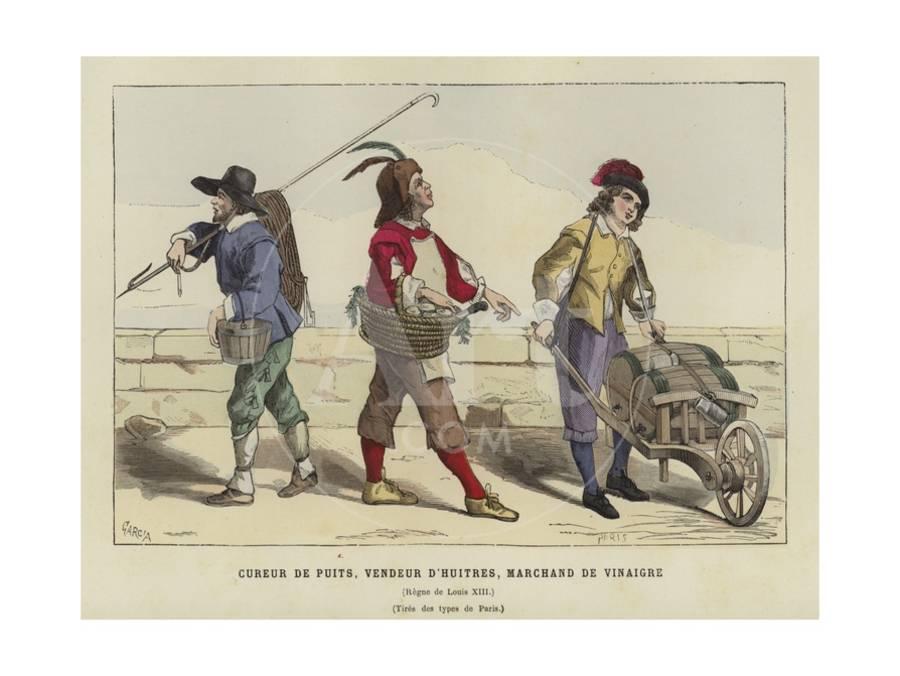
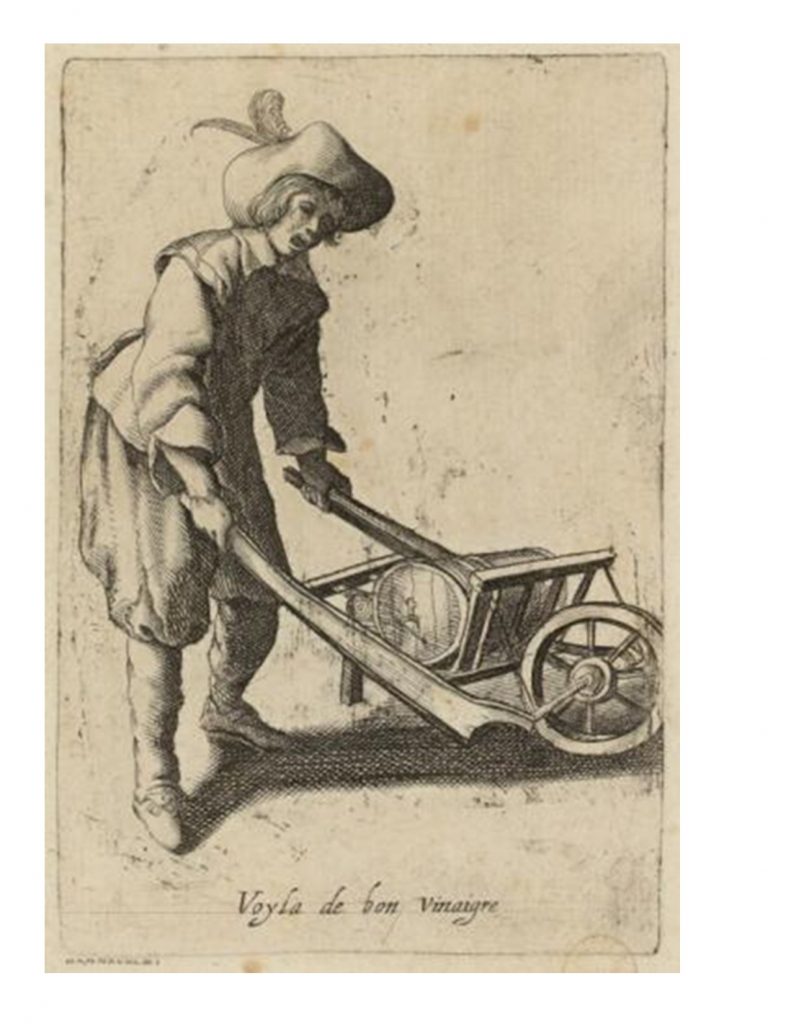
As I said, the process of making does mean that you get exposed to the history as well. I found a woodcut of a vinegar seller with a wheelbarrow. If the Dream is built on trying to have an actual medieval experience, what could be more Dream-like than to demonstrate how vinegar was sold (at least somewhere). I am trying to move you to a more medieval experience. Here is a period style vinegar, “sold” to you in a period style, by a guy dressed in period style. Isn’t that the Dream? Isn’t that what we are playing for?

What am I doing? I am hoping to get people to think differently. That words like sugar, honey, and vinegar meant specific things to the people in the various regions and times of the world. It is very much a modern conceit that all Big Macs must taste the same. I am providing, as much as I am able to, a tool for those who cook to experience something different. My vinegars aren’t mass produced from leftover, unsellable liquors. They are complex and bright. I am aiming to provide an experience. Time will tell if I succeed.

Why am I doing it? I am a human. I have ego. I want to be special in some way. Very few people are doing what I am doing and perhaps no one else is doing exactly what I am doing. I want to give to others as well. I can do this thing. Others can take what I did and do something with it. The herdsman raises the cattle, the butcher slaughters it, the chef cooks it, the server serves it, the King offers it to his guests, and peace is ensured. The better and more authentic I can be, the better and more authentic they can be.

I remember going to Boar’s Head in Dec 2019. I had met the head cook for the feast maybe once at KWC&B that summer. Once I got on site, I went back to the kitchen with a quart of vinegar, I didn’t even have to open my mouth. The cook turns to see who opened the door and with a warm smile, “You’re Oswyn, right? What do you have for me?” That is why I do it.

SCA Life, Vinegar

The Illusion of Certainty, conversations with Peers, and Crown Tourney Fall 2021

First let me cover the Illusion of Certainty. I learned about this concept in some Human Resources training but it applies many places. Humans, and especially modern humans, like certainty. We want to be able to know things are true. And we want to give true statements. In HR, the example given was a project deadline. Manager: “Here is this project. When do you think it will be done?” Employee: “I can have it for you by the end of the week.” The Manager now has certainty on when the project will be done but it is an illusion. Much can happen before the end of the week. Maybe the project will experience mission-creep. Maybe a disaster will happen. But the employee can’t say “I don’t know when it will be done.” The employee wants to project certainty as well.

The other part of the illusion is that everything is knowable. We believe there are answers to all questions. You just have to look hard enough.

And lastly, once we know something, we tend to persist with that “fact”, regardless of new information.

This all has to do with brain chemistry and I don’t understand it well enough to explain it so let’s leave it as that. The brain likes to feel like it knows stuff and doesn’t like having to rewire itself unless it has to.


I had a great conversation with a Laurel yesterday (10/16/21). He had good things to say about my vinegars. He had positive and negative feedback, given in an approachable way. It was likely one of the more in-depth conversations I have had with a Laurel (outside of my own). Laurels who are reading this: you need to do this more often. You need to seek out artisans and have in-depth conversations with them. You do not need to know the subject area to provide feedback and challenge assumptions. This, to me, is what I wanted to have happen at the Tournament of Art in Jan 2020. Don’t wait! Have these conversations with everyone now!

One of the main things he said to me is “you are looked at as an expert. If you say something is a certain way, people will believe you.” I think what he forgot to say but was implied in the rest of the conversation is “you should make sure you are right.”

I sometimes don’t put the phrase “as far as I know” or “to date” or other qualifiers when I am asked questions about vinegar. I, just like everyone else, like to be right. I want to project certainty. I am very well aware that I don’t know all the answers. I am bit like Socrates here. I know that I don’t know. And in asking some of the questions, the asker wants certainty that doesn’t exist.

For instance, from the Virtual Cooks and Bards, I was asked by two separate Laurels, what the phrase “strong vinegar” means? I don’t know. I don’t know that anyone knows. There might be some archaelogical evidence out there that someone could analyze with X-ray diffraction or your favorite technique and tell us, “ah yes, strong vinegar was at least 10% acid by volume because we found residue in all of these medicinal cups.” I don’t have access to that. More to the point though, our medieval ancestors didn’t either. They didn’t really know about acetic acid until late. They didn’t have a way to measure % acidity as we do. They certainly didn’t know it was a bacteria turning their wines and ales into vinegar. We want certainty. We can’t have it.

What I did say is “my guess is that strong vinegar means undiluted wine vinegar.” Medieval people knew they could dilute vinegar (they did it often in drinks) and they probably knew wine vinegars were “stronger” than ale vinegars. That is a simple taste test. I am guessing. I often guess. It is an educated guess but a guess nonetheless.


The main questions posed by this Laurel was one of research. “You have shown that people used wheelbarrows in France to sell vinegar. How can you say the same of England?” It was couched more in terms of my approach. Did I look for it and found nothing? What was my research process?

This discussion has occupied my brain for most of the last 24 hours.

My first impulse is “is this an important question?” Does it matter whether the English sold vinegar from wheelbarrows or not? If I did find evidence that they did, is that sufficient? For instance, if I find something that shows that someone in London did that, do I then need to find evidence that someone in Somerset did that? Do I need to go further and show that someone in Bristol did that? Ultimately, I decided that it was not an important question.

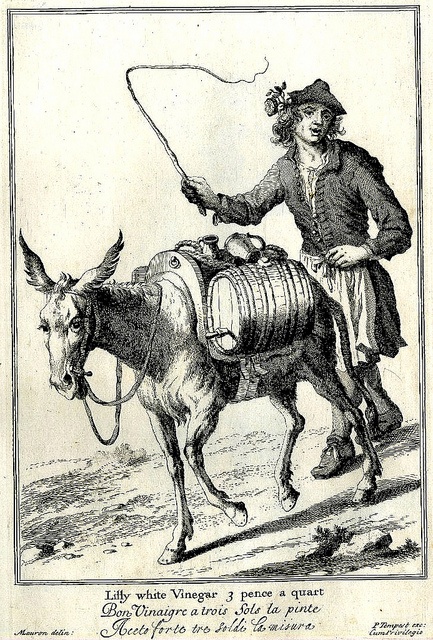
I did find this illustration

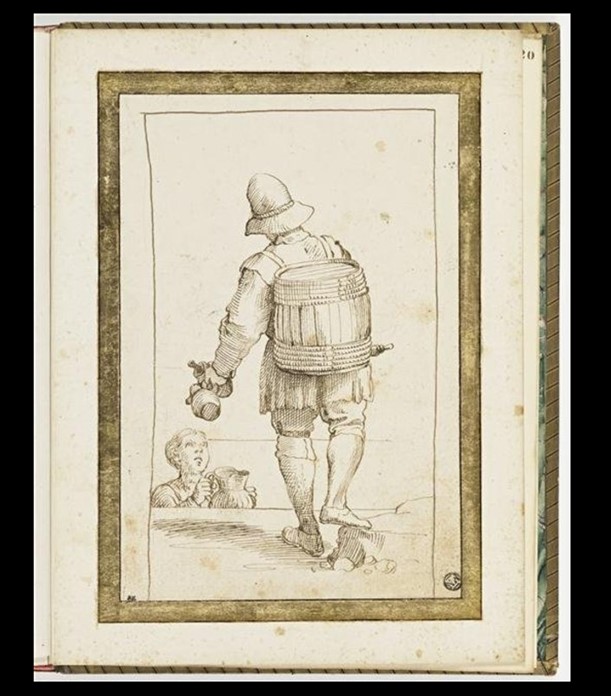
This is from the 1688 the Cries of London. What does this prove? That vinegar merchants in London sold vinegar via donkeys in 1688? Certainly this ONE did. But we also know that there were spice shops that sold vinegar. We know that people sold all manner of goods from carts. So, do we state that English vinegar sellers did not use wheelbarrows or carts? My earlier woodcuts show French sellers used wheelbarrows and at least one guy strapped the barrel to his back. Are those the two choices? Does 1688 tell us anything about 1500?

For the purist, 1688 tells us nothing about 1500. The evidence you found is what you can say. This illustration is out of period and shouldn’t count. Thinking long on this question, I am not a purist. I work more by intuition. Certainly if a French guy figured out he could use a wheelbarrow instead of his back, the English guy could have figured it out too. It is like the question of why do all pyramids look similar? Well the answer that makes the most sense is there are only so many ways to stack blocks and since people are mostly the same, they all figured out a similar answer.

We know that there were many mobile vendors. Some probably used their backs, others a cart, others a wheelbarrow, and others a beast of some kind. There are only so many ways to move a 40 lb barrel around.

We chatted on Sunday as well and I showed him the 1688 illustration. To an extent, it verified that there were small sellers. So why were we having the conversation? I assumed people knew about things that I didn’t tell them. I didn’t include dates in my blog post (I did on my display printouts). And I tend to write more formally in class notes and documentation, which include references, than in these posts. I have since corrected my blog posts.

I was the expert and I didn’t connect the dots for the reader. I assumed you were in my head. I also assume there are like 5 people who read my blog and therefore I have a very limited audience.


One of the other things I realized is that I am an experimentalist, not a researcher. With cordials, I ran an experiment on the same cordial in different liquids. With meads, I ran an experiment with different honeys. With ciders, I ran an experiment with different yeasts. And with vinegars, I have made vinegar out of so many things that it in itself is a giant experiment.

An experimentalist is good with uncertainty. There are many variables. There are things that should work but don’t. Experimentalists are good with “this works but I don’t know how.” Researchers want to know the TRUTH. My Laurel friend is a researcher and I am sure he has a different opinion. It is a bit like Sheldon and Leonard in Big Bang Theory.

In doing brewing, cordials, and vinegars, I am less interested in being period accurate. Why? I can’t recreate the agriculture conditions that existed. If you want certainty that this is an authentic medieval English West Country cider, we need the apples that existed back then, grown in the same soil conditions, pressed with the same tools, etc and so forth. We can’t do it. Even someone with the right knowledge probably can’t do it. Can you reconstruct what the atmosphere was 1000 years ago? In a specific place? So it is all “good enough.”
I can make something similar to it. I can make something with modern apples using a period process. The experimental approach is why I like what I am doing. It allows me to do what I call “a step back.”
You start with an entirely modern process. Then you take a “step back” to make it less modern. Let’s say you start making apple cider with frozen concentrate. You then take a step back to sweet cider. You then take a step back to pressing apples. You then take a step back to find apples that are like the medieval ones. You then can take a step back to plant your own trees of those apples. You can also make a medieval cider press and learn to brew in casks instead of glass carboys, etc. You go back as far as your willingness (and money and space) allow. At any point in the process, you can say “good enough.”


When I do research, I do look for certainty. Those are often a challenge from someone to something I think I know. Balsamic vinegar is an example. I have been challenged a few times “is balsamic vinegar period?” For a given value, yes it is. The trouble is no one used that word until the 1700s. I had to find references and other opinions that the Duke’s special vinegar is likely balsamic vinegar but the truth is we will never know. It was a secret. The growing of those grapes more than likely changed significantly. The soil conditions might be very different now. The real answer is “no.” The modern balsamic vinegar isn’t period. It can’t be. Nothing modern can be the same as it was 1000 years ago. The answer to the actual question being asked “did they have something like balsamic vinegar in period?” The answer is absolutely yes. You don’t give an emperor a gift of vinegar unless it was something truly special.

When I do classes on my history, we can be more certain. But making something to mirror a medieval process, we must be okay with uncertainty. If for no other reason, the people writing stuff down didn’t include stuff that we might think was important.


I had several more conversations and more to come over the next few days. I am pleased I made an impression on at least one individual. I am pleased to learn about things I need to work on. You eat crow as you eat anything else, one bite at a time. I am tired too. Crown tournament was 100% not about me yet I am as tired as if I had fought to the finals and lost. As I often tell my therapist, it is unfortunate that life is lived in first person. We would have much more understanding of each other in a different point of view.

Persona, SCA Life, Vinegar

Making a Vineagrier – Finis

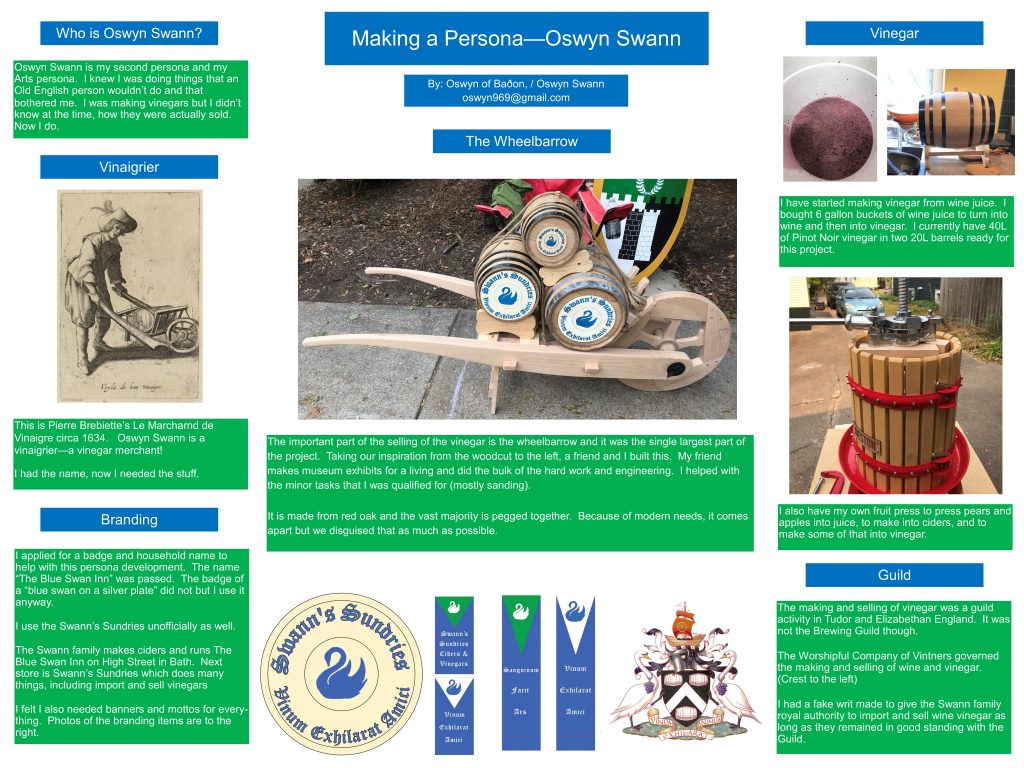
It was a long time in coming but I think we have the end. Below is the tri-fold display showing the journey.

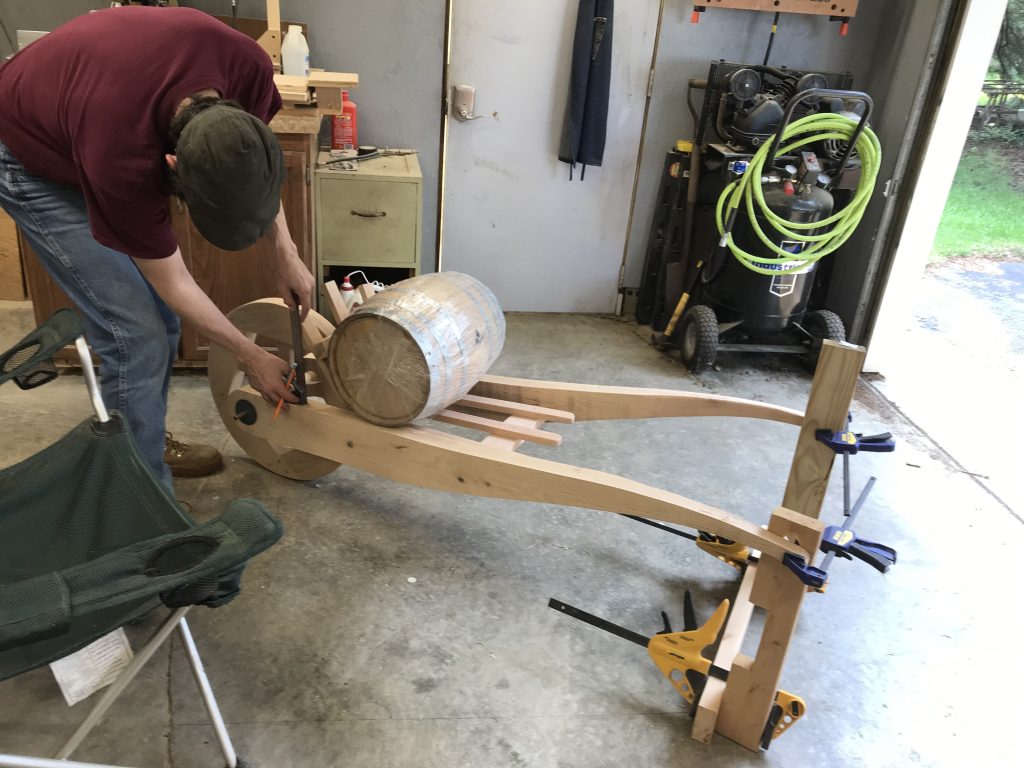
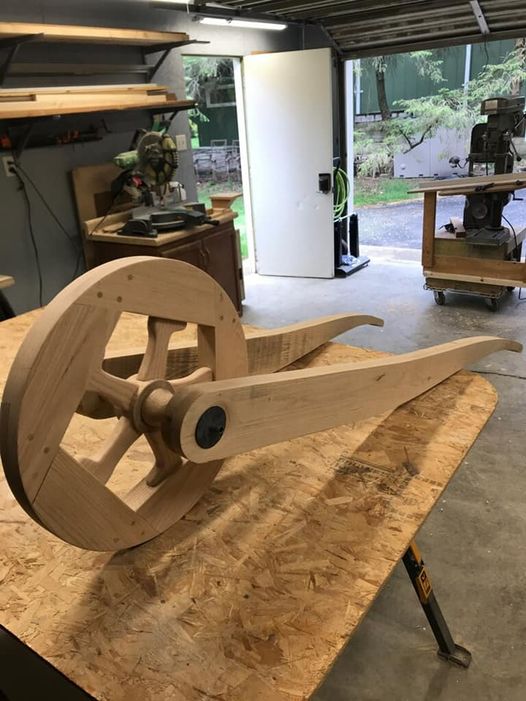
The center of this display shows the wheelbarrow completed. I am very proud of it.
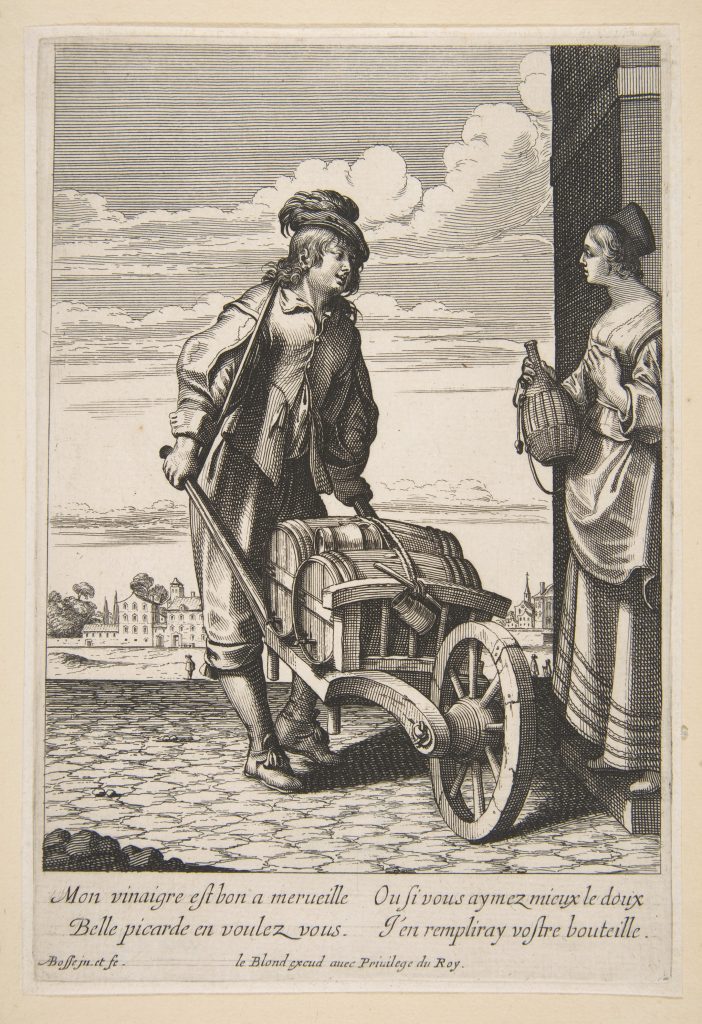
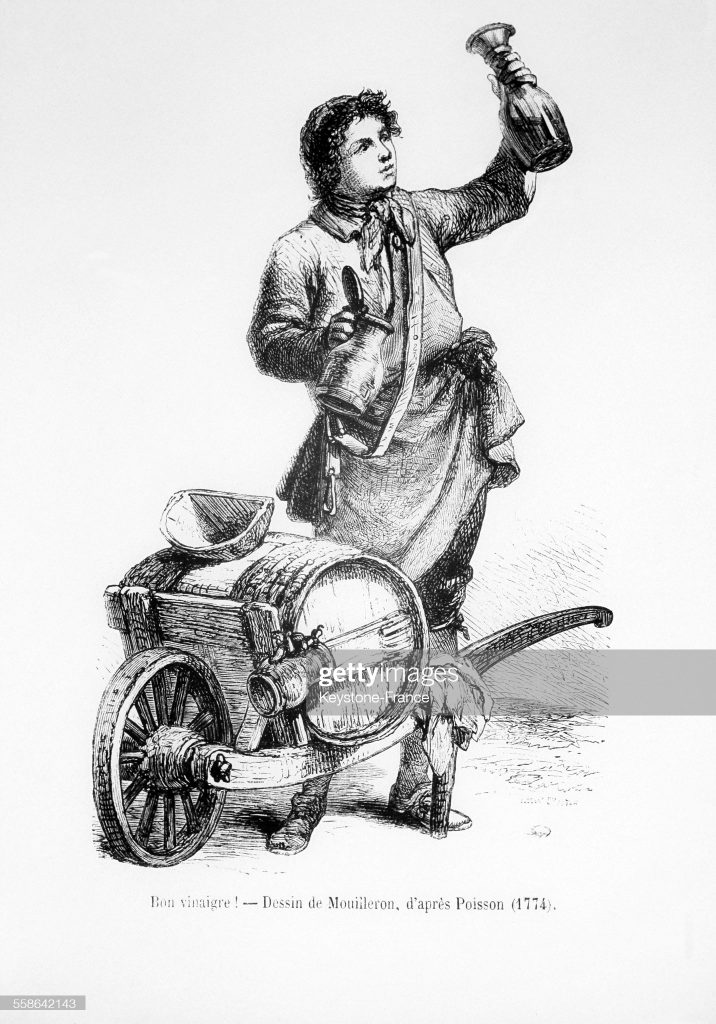
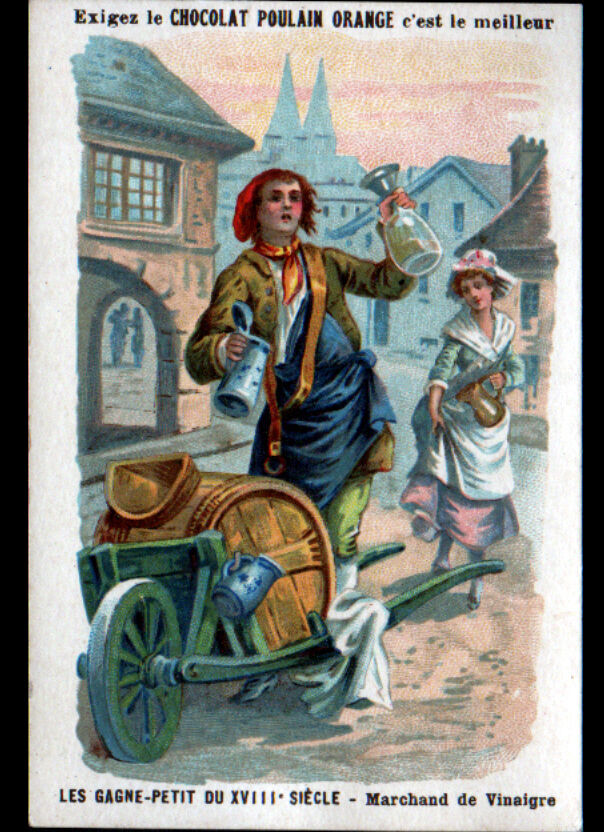
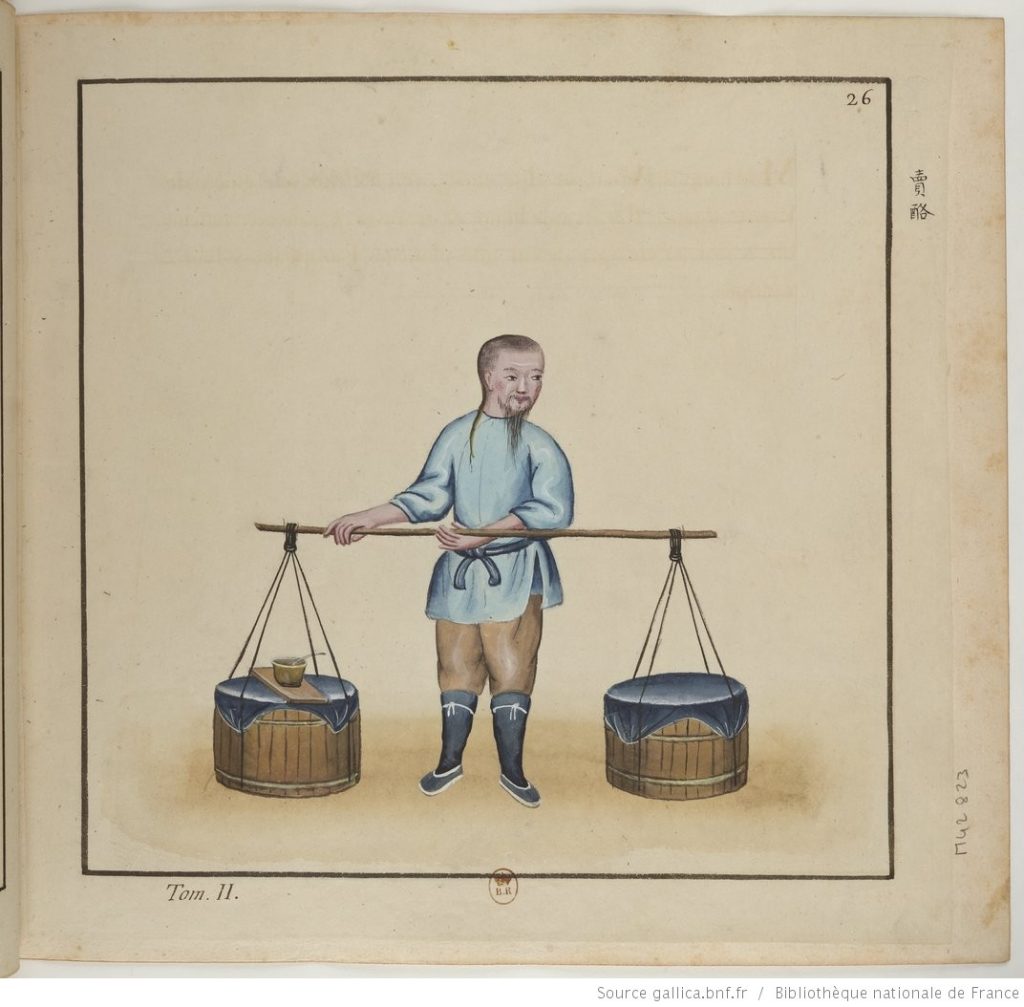
I also found more woodcuts.

I don’t think there is any doubt that vinegar sellers used wheelbarrows, especially near the end of period. I am not going to strap a barrel to my back though.

It was a heck of a journey to be inspired, proof, and create the things needed to show this period activity. How was vinegar sold? Good vinegar was imported from France, delivered to the ports of England, and then wheeled through the streets. You stopped the seller, filled your vessel, and he charged you the going rate.

According to The National Trust of the UK, imported vinegar from France would come in tuns (~252 gallon barrels).  Wine from France ran ~3 pound per tun and vinegar was a bit cheaper.  Using 3 pounds per tun, 252 gallons per tun, 240 pennies per pound, and modern equivalents, an ounce of imported vinegar would run about a 0.022 penny per ounce.   The average maidservant made ~3 pounds per year.  Imported vinegar was affordable but local vinegar from ciders or ales would have been much cheaper. (https://www.nationaltrust.org.uk/tudor-merchants-house/features/what-could-you-buy-at-the-tudor-merchants-shop). 

For “selling” purposes, I will be canting, “vinegar, a ha’penny per pint!”

Persona, SCA Life, Uncategorized, Vinegar

Making a Vinegrier – WIP wheelbarrow

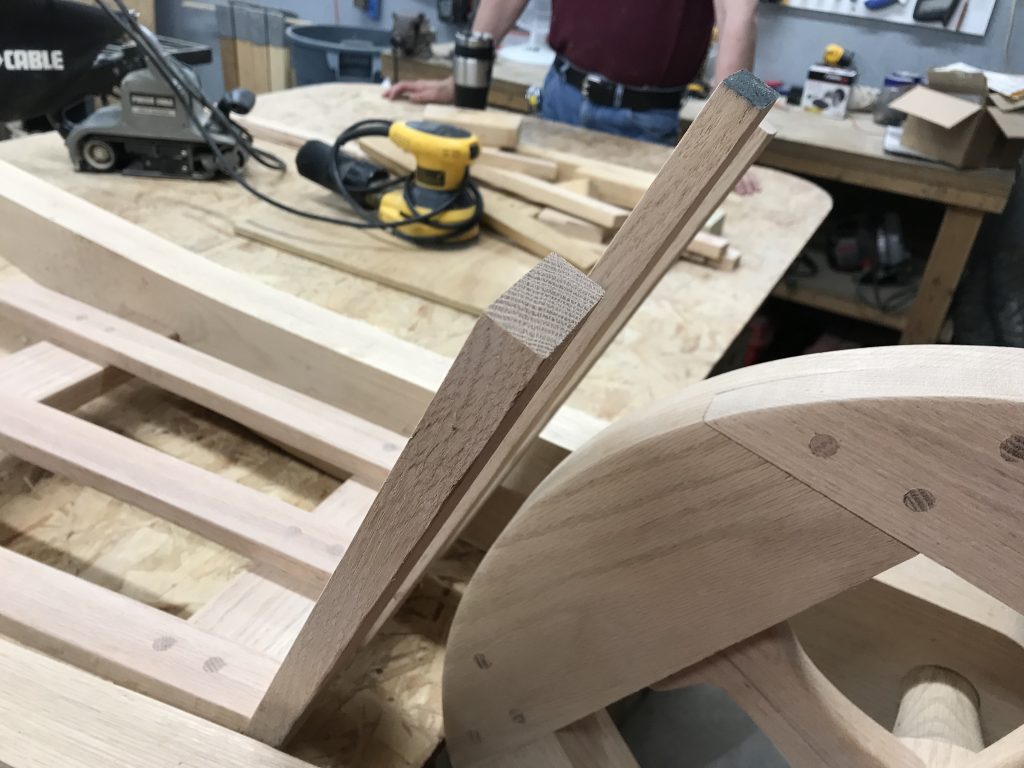
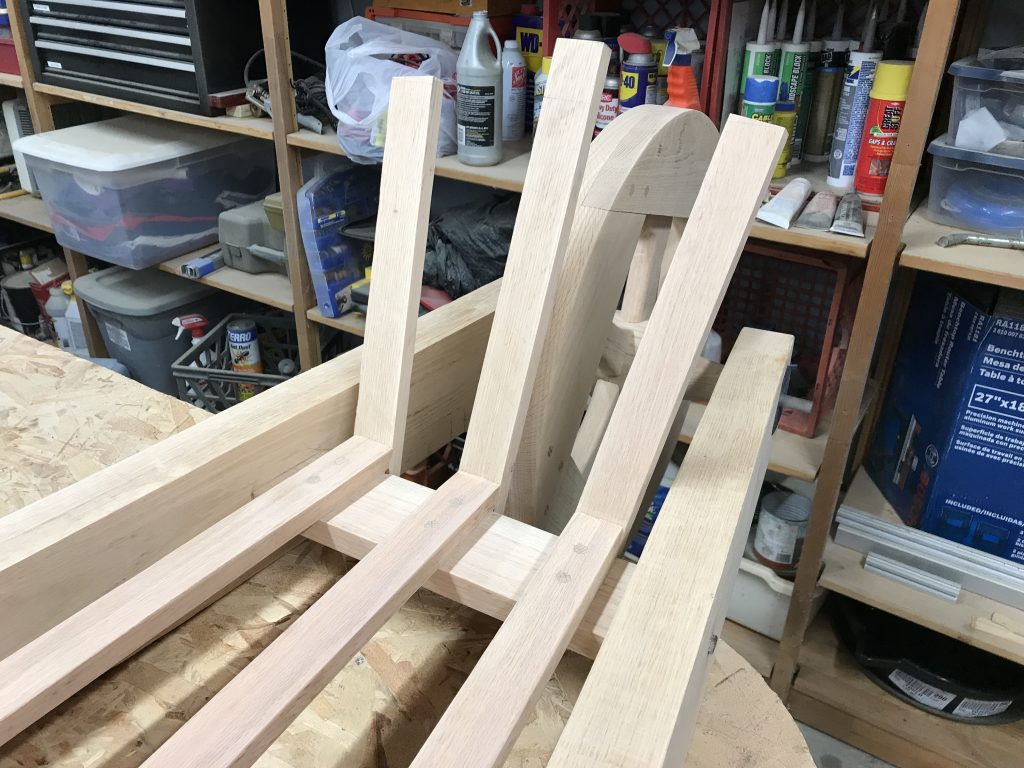
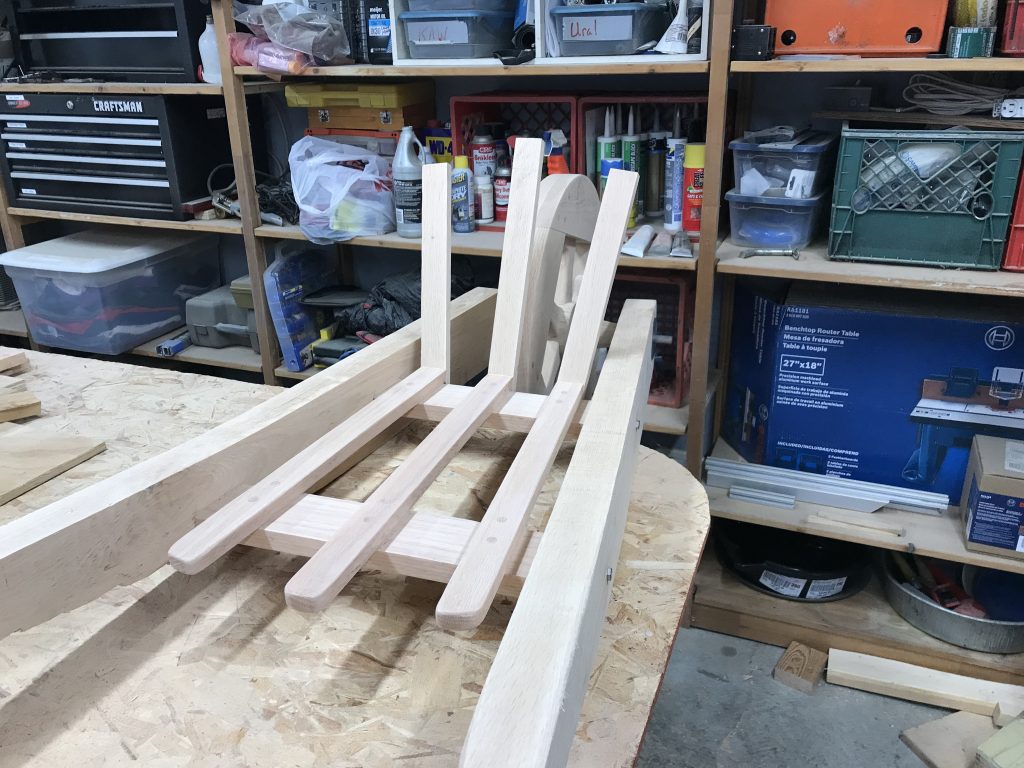
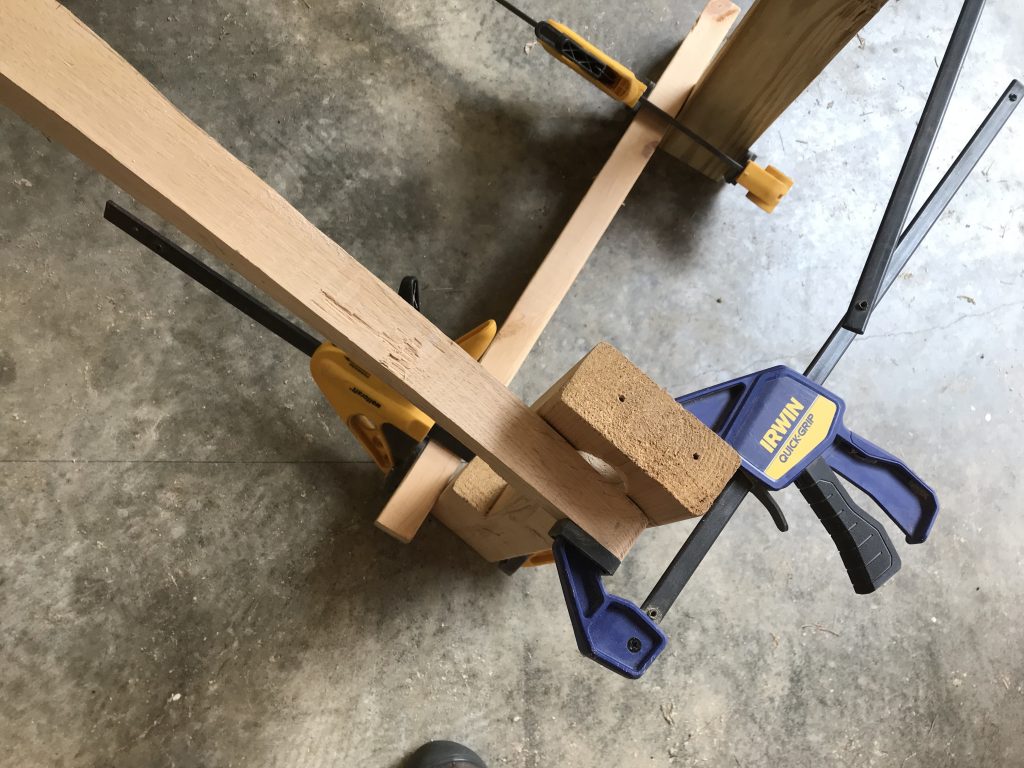
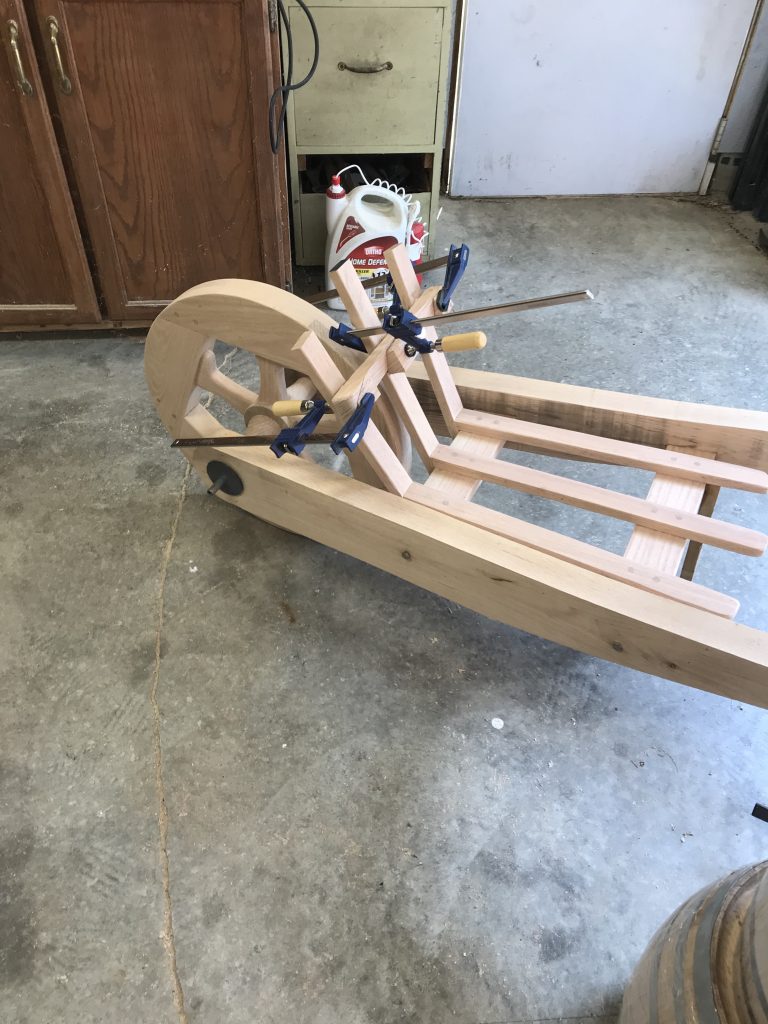
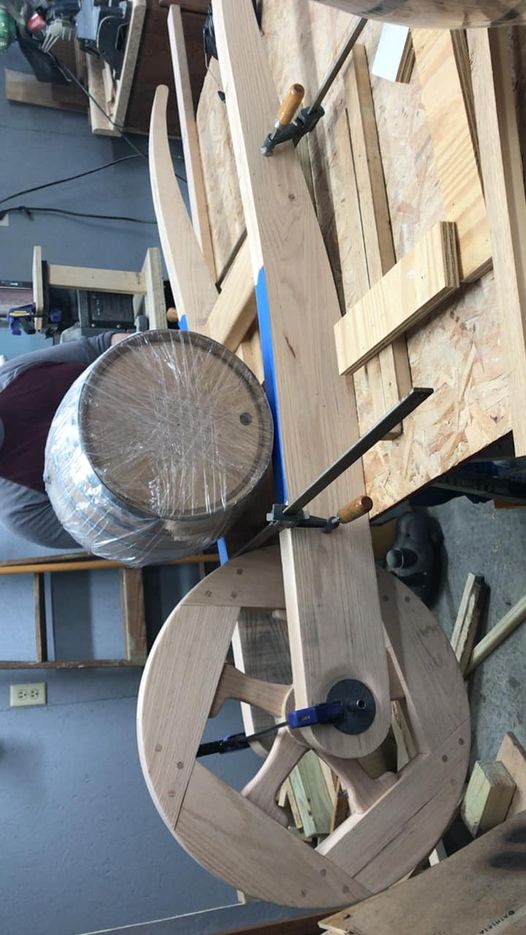
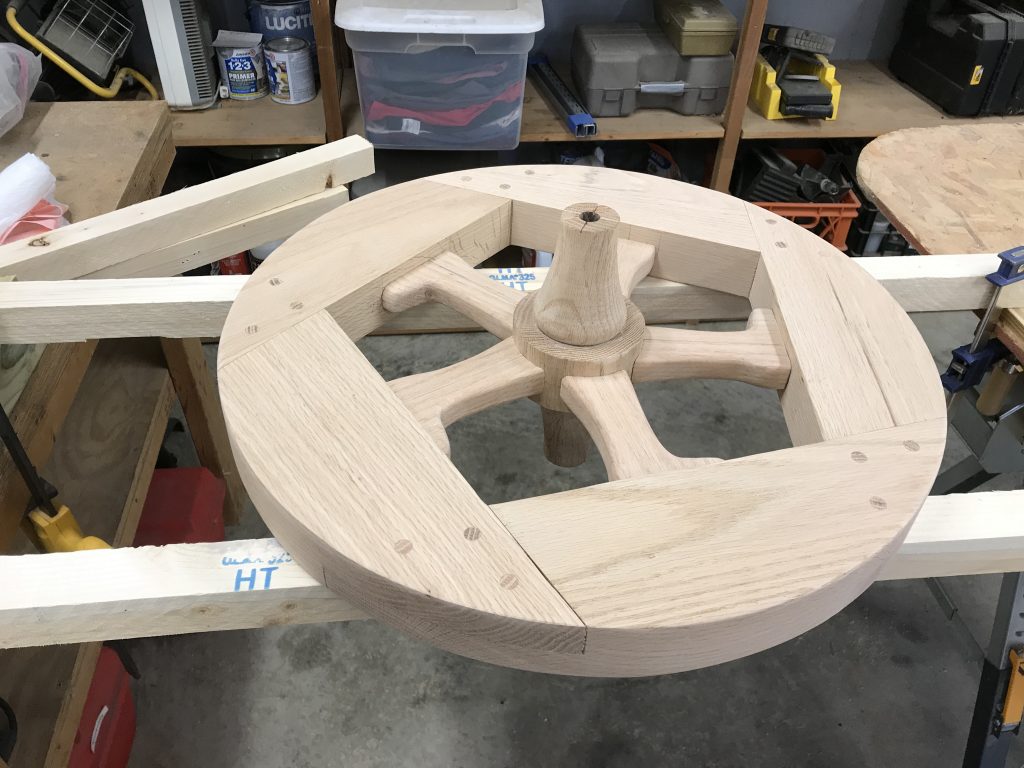
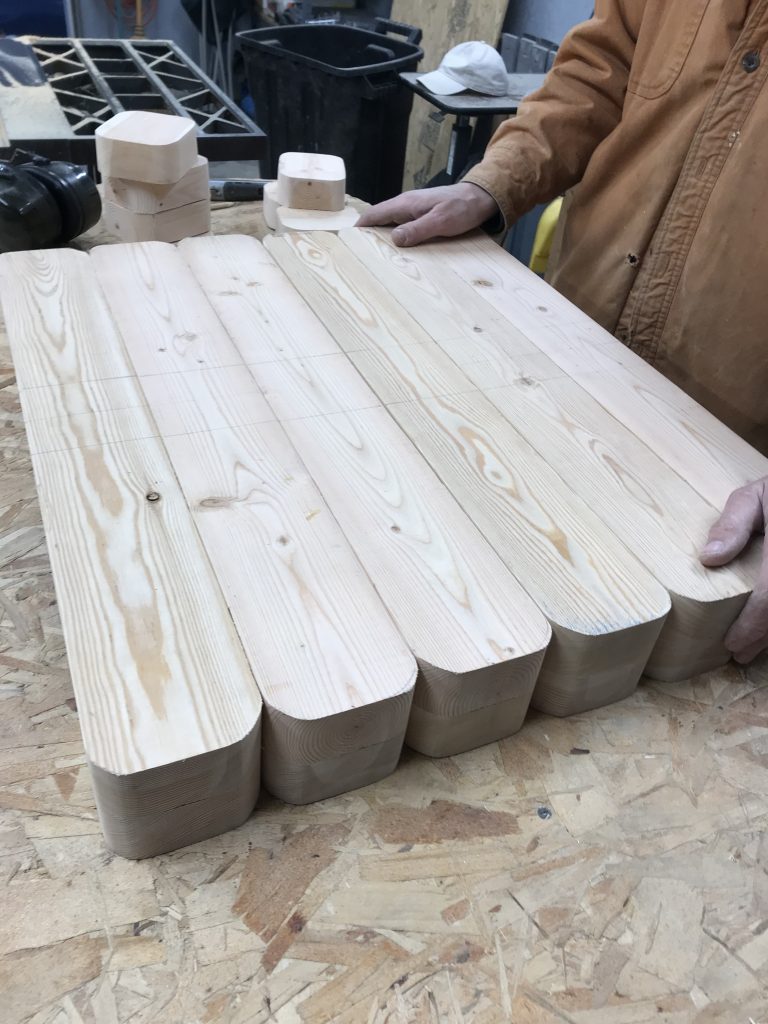
The biggest part of the project is the making of the wheelbarrow. Initially, I was going to make it under the guidance of a friend. But then COVID hit. So he ended up making most of it. I am helping.
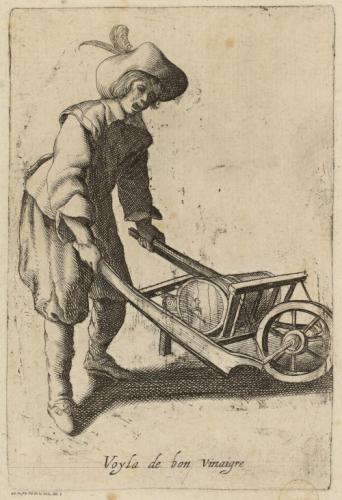
The inspiration is this:

This is an etching of how vinegar was sold in late Medieval France. There is no reason to believe it would be much different anywhere else. Vinegar wasn’t sold in bottles until the 1700s.
Here is where we are so far

The next step is to do the cross braces, the backstop, and the legs. Perhaps some decoration.

One complication we have is: I need this to break apart. A proper medieval wheelbarrow would not have been built that way.

SCA Life, Vinegar

Making a Vinegrier – Part 7 Banner Stands

Another year before Pennsic 49 will happen.

So another step in the development of Oswyn Swann.

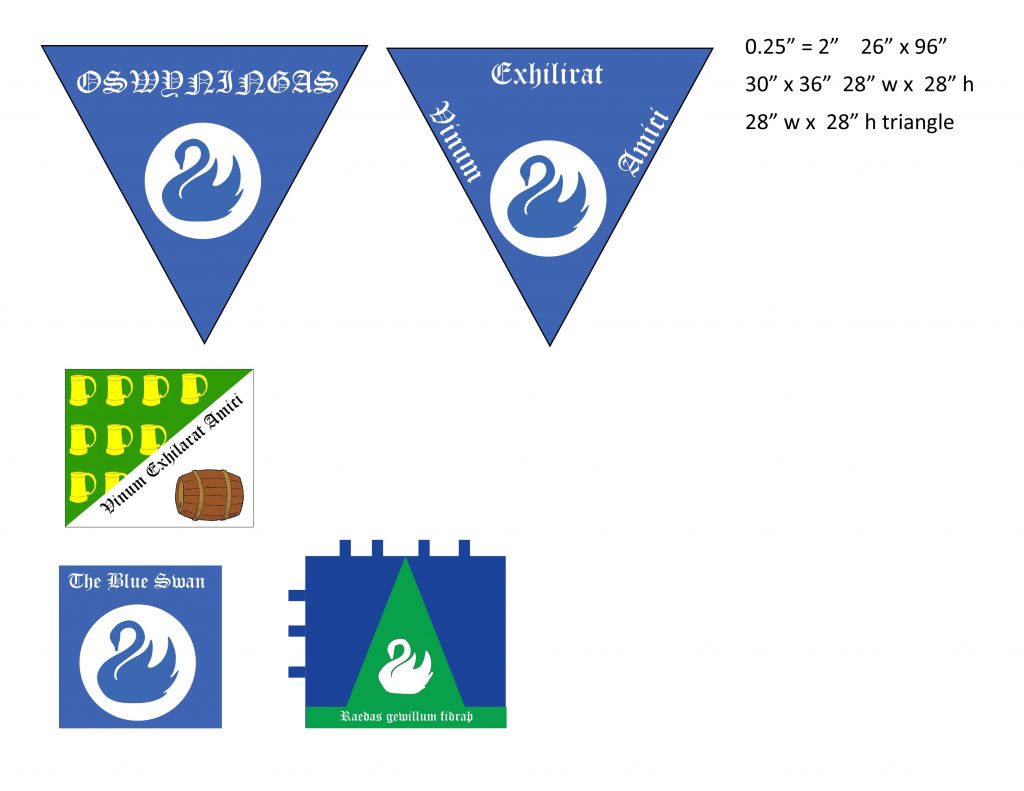
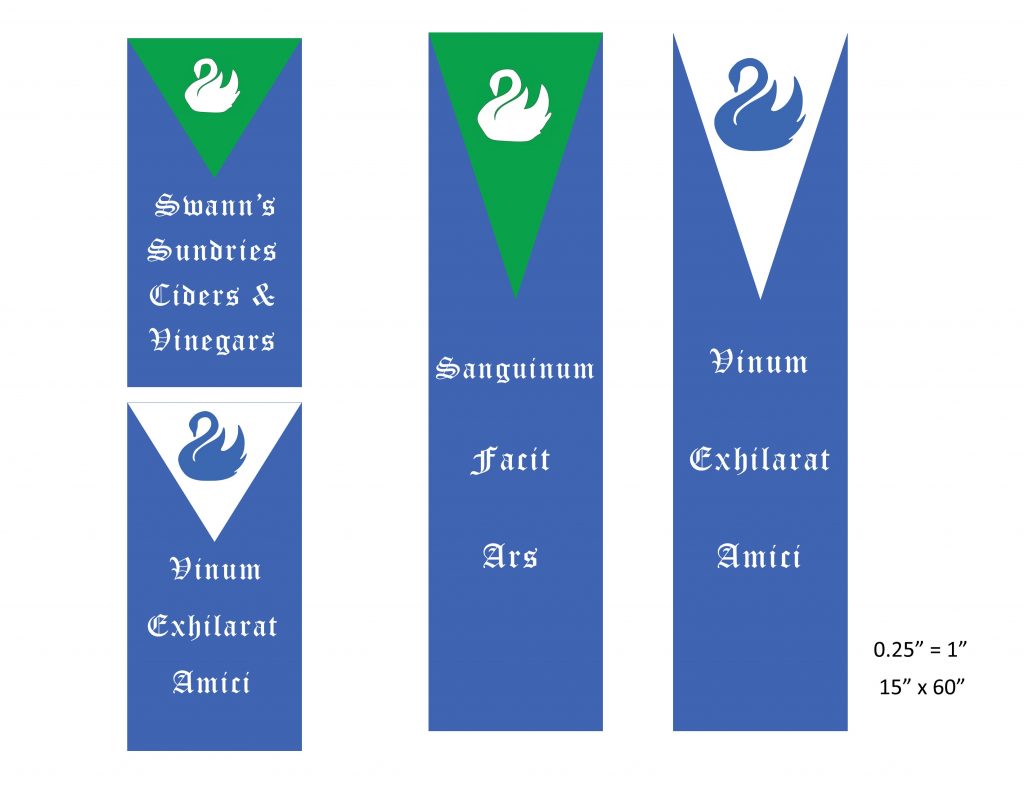
I have posted earlier on the banners. They have slightly changed but are largely the same. I have submitted for a badge and household name so some changes have been made. I have the older ones still as I printed them before the badge and name were approved.

The banners needed poles. I worked with a woodworking friend to make them.

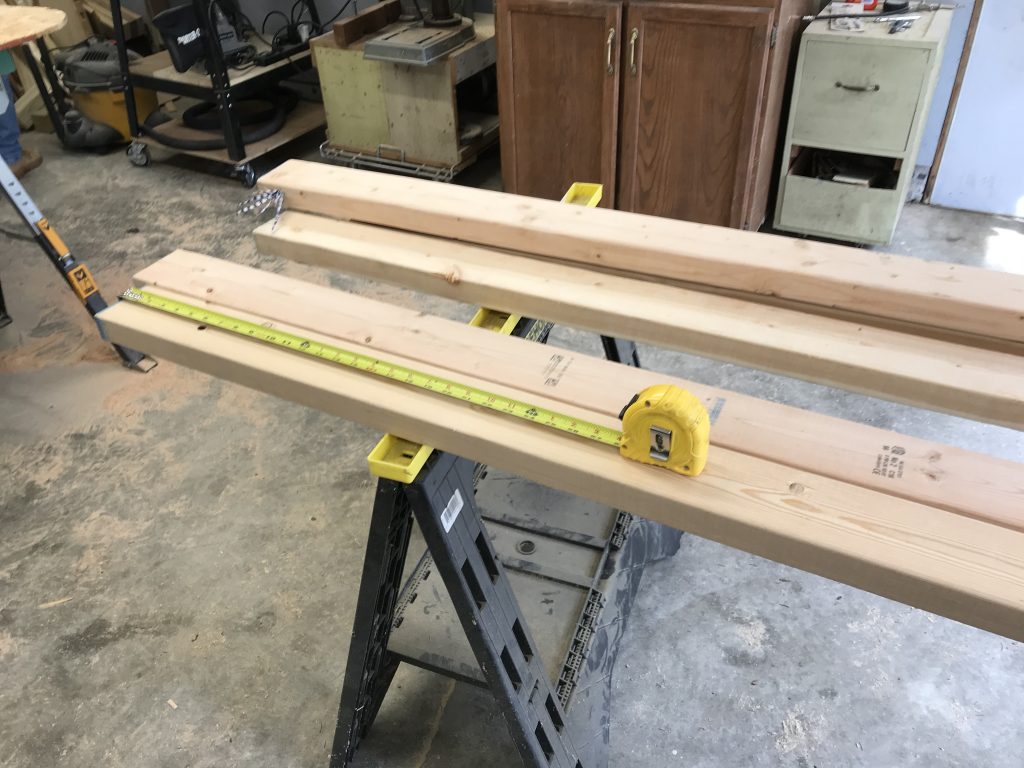
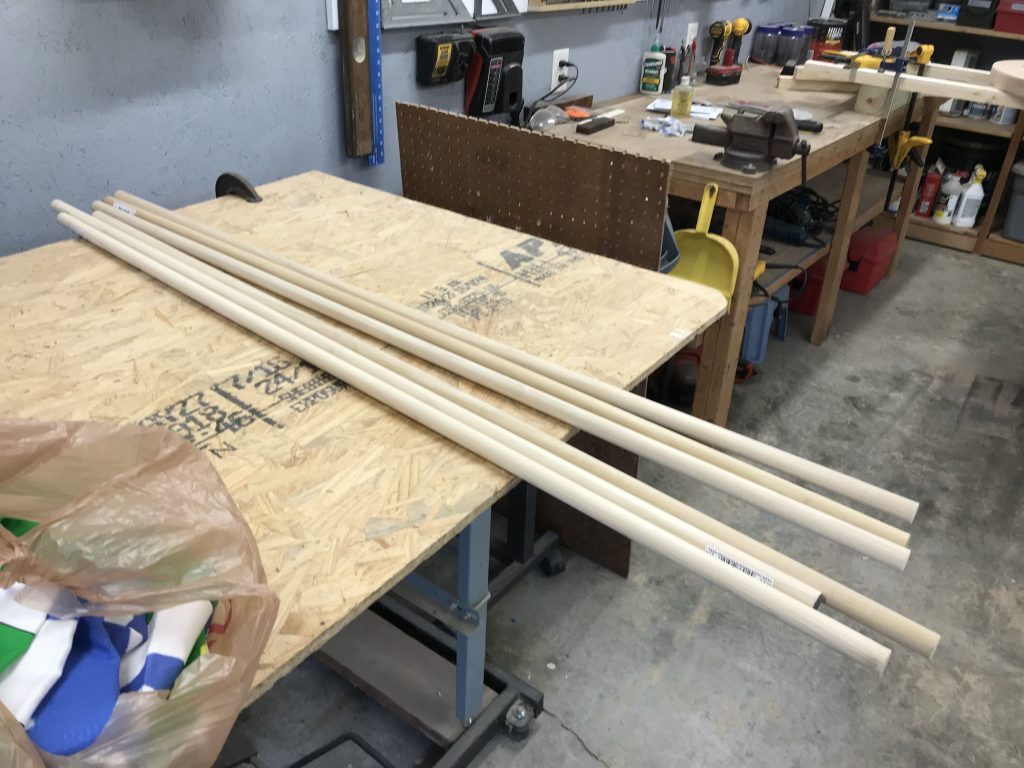
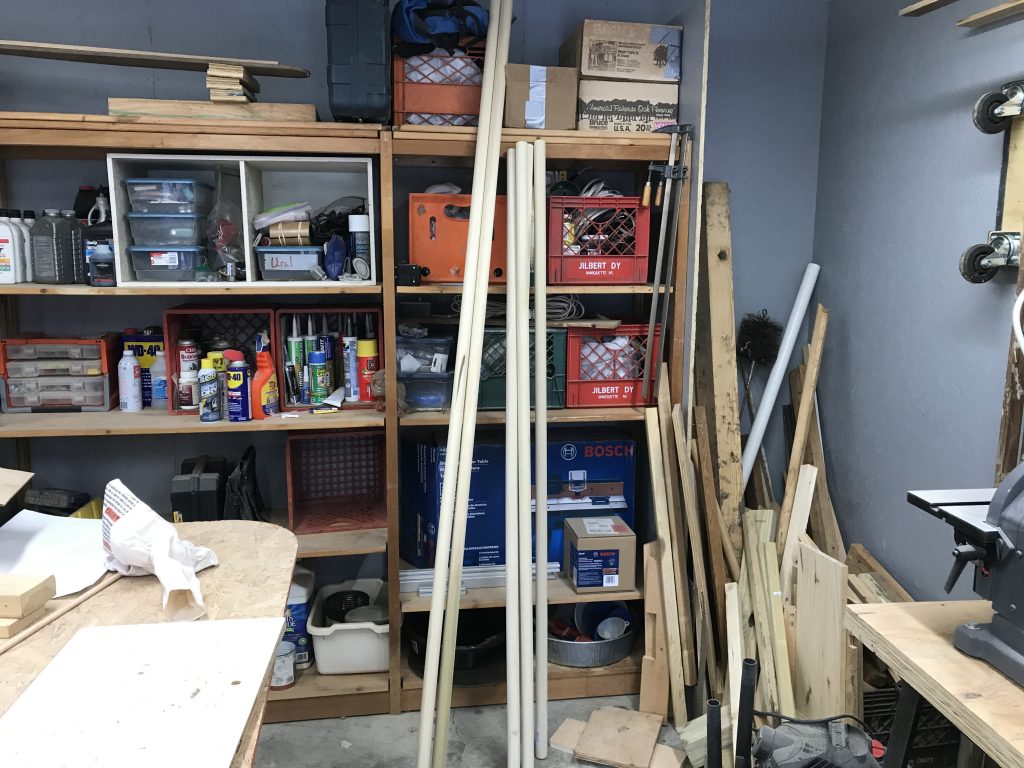
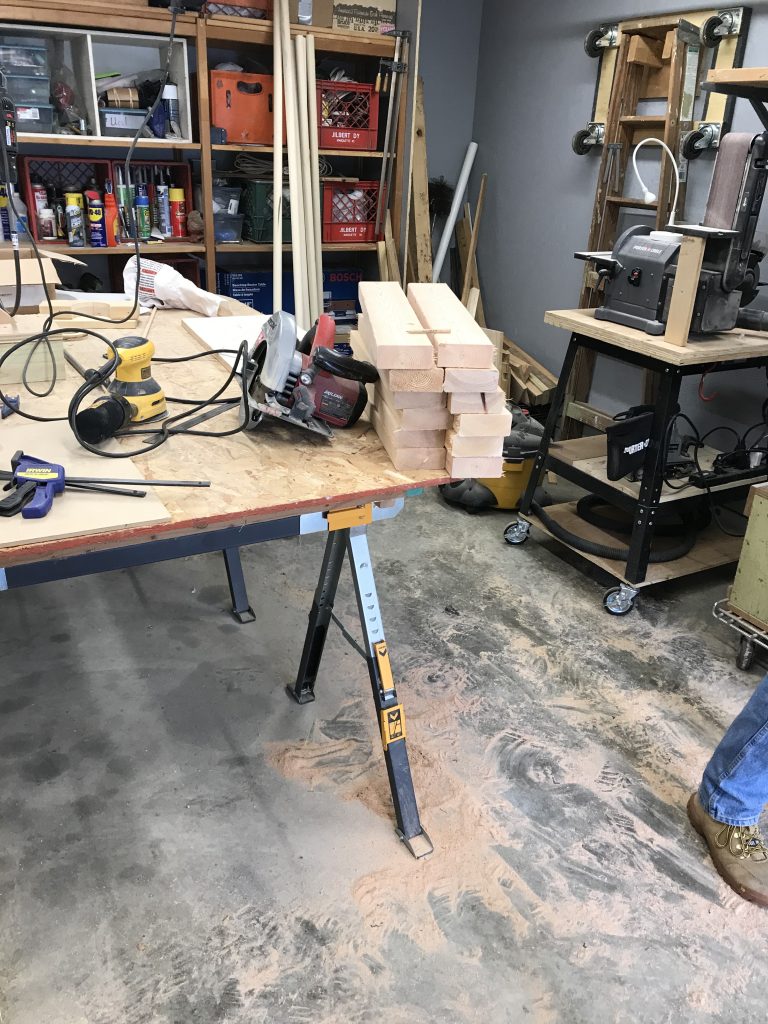
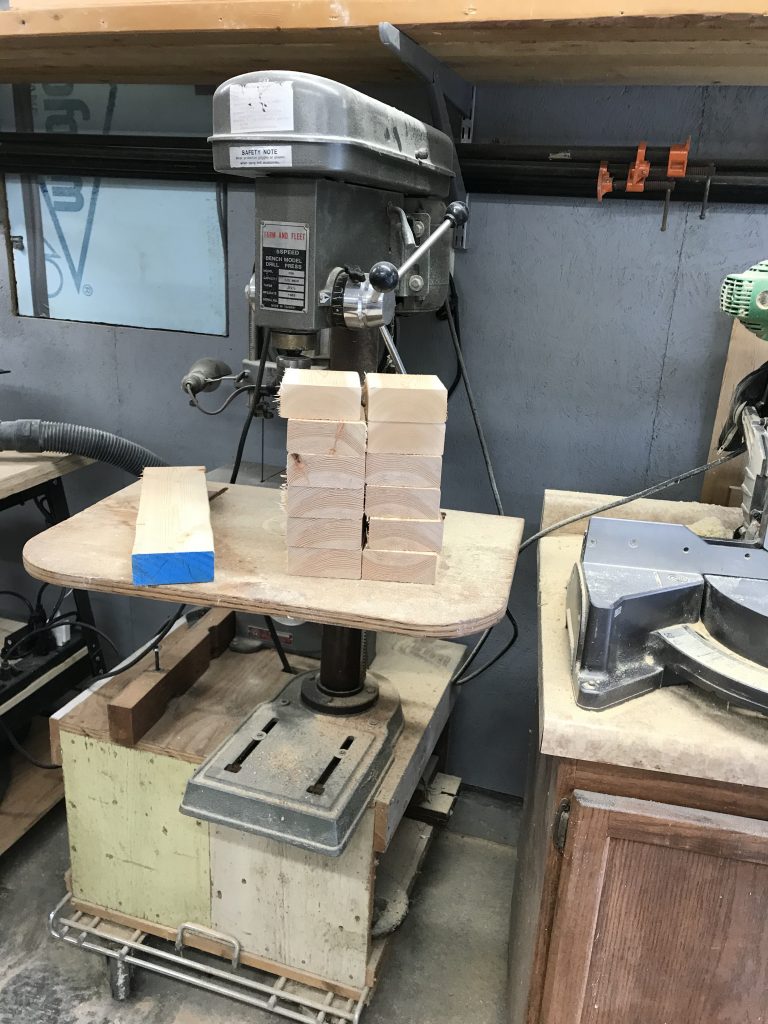
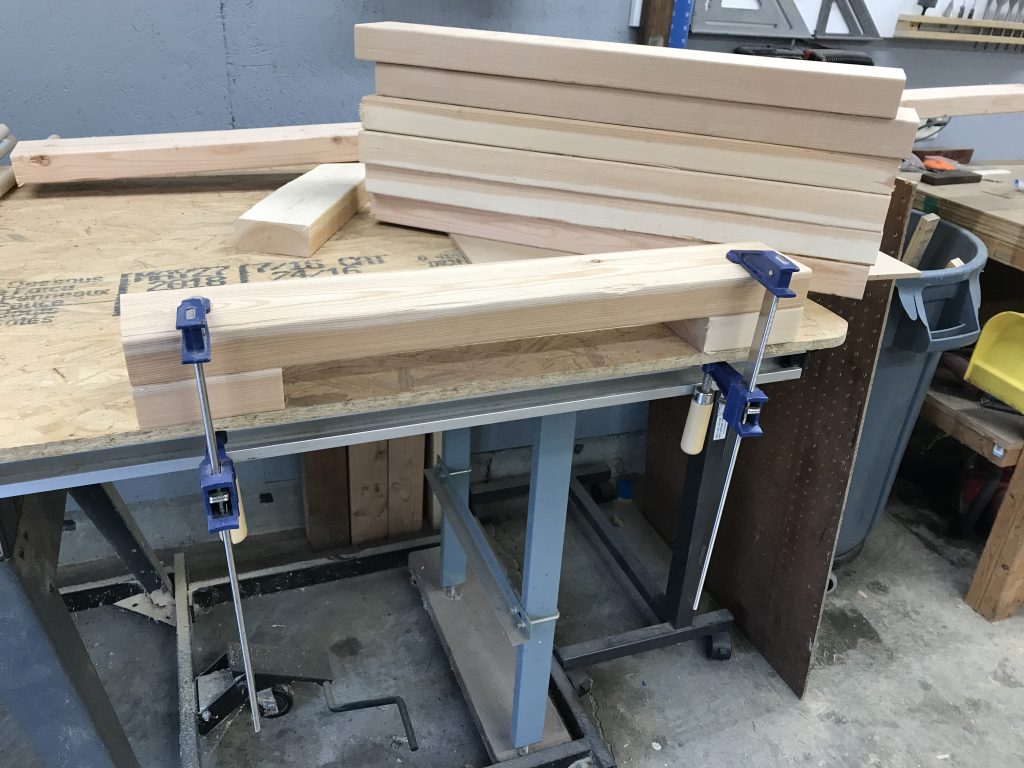
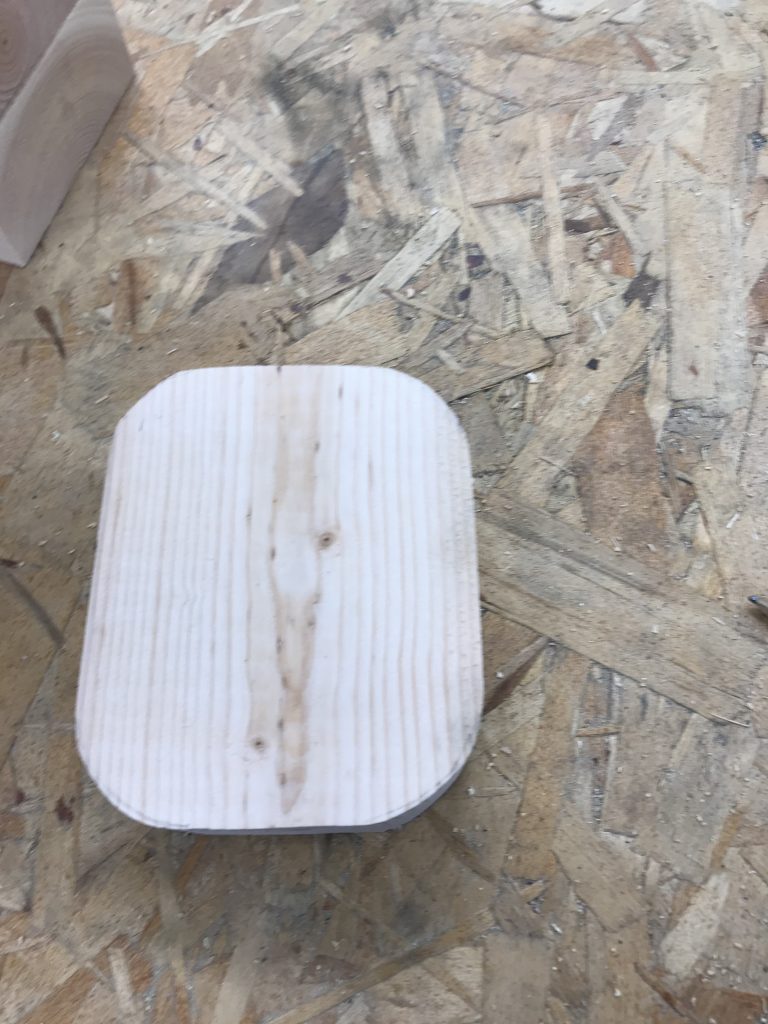
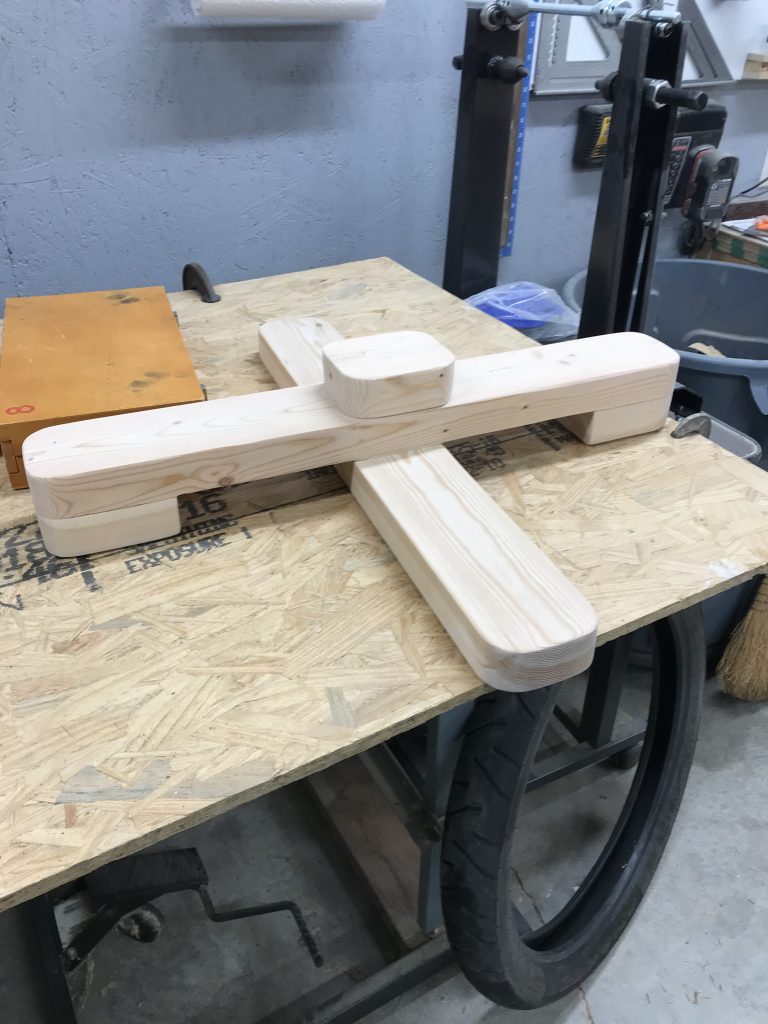
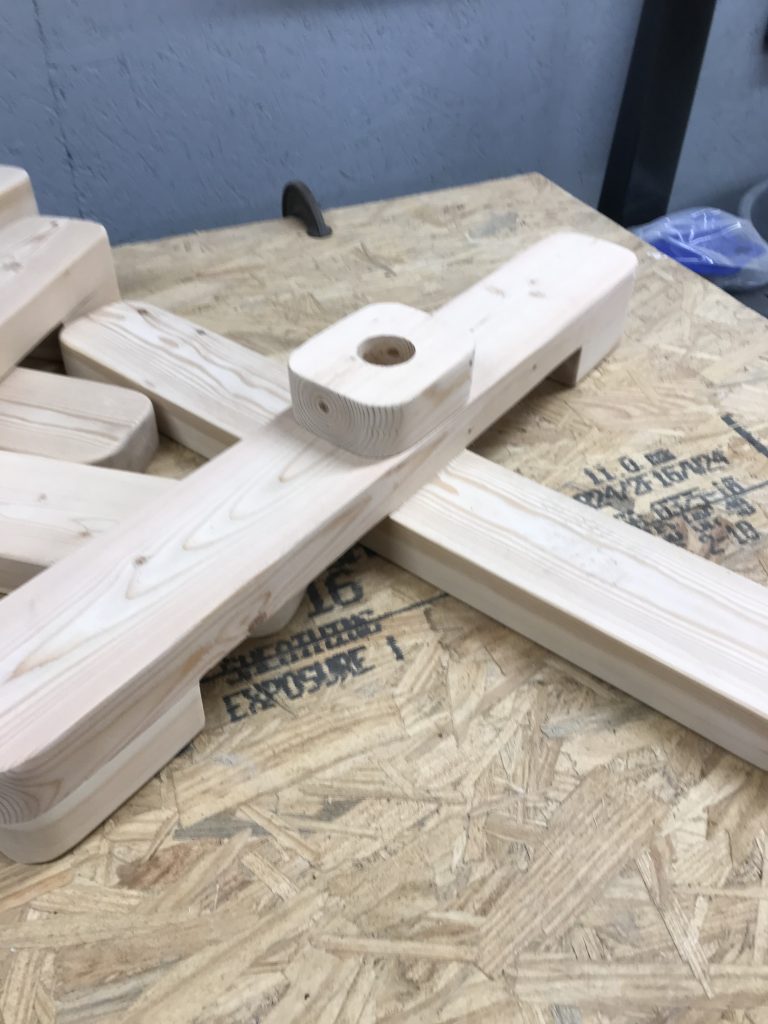
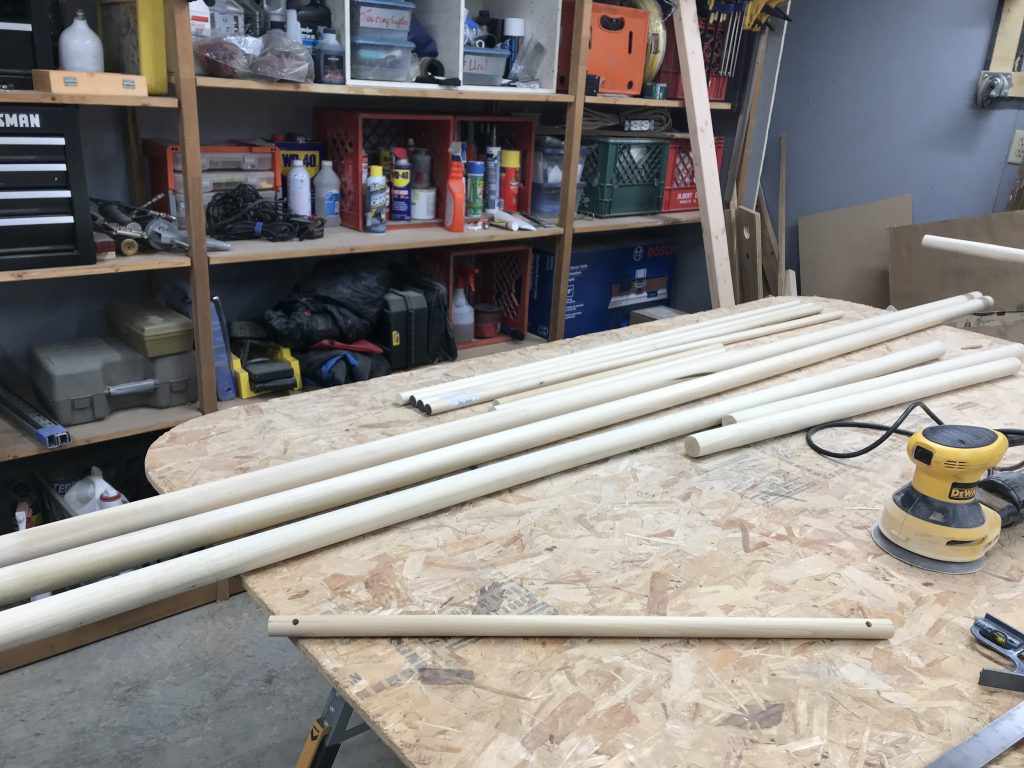
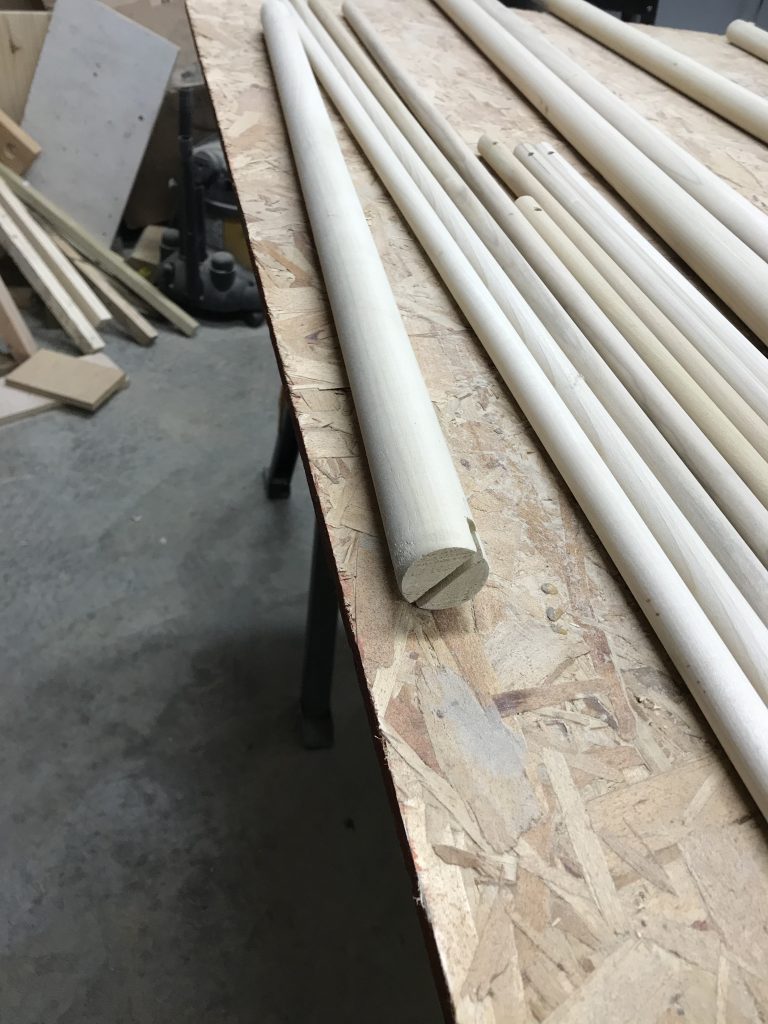
To make the banner stands, we cut 2 x 4s to lengths to make the bases and glued a small block to give more depth for the pole. I rounded the corners with a belt sander. We also glued feet to part of the bases. For the poles, I used a palm sander to make the one end slightly less thick to fit in the holes. Holes were drilled in the base. We cut notches in the uprights and drilled holes in the cross pieces. A string will go through the holes of the cross braces and rest in the notches. The banners will hang from clip rings on the cross pieces.

Persona, SCA Life, Vinegar

Making a Vinegrier – Part 6 Favors

I recently applied for a badge and a household name. I then decided I should update my personal favors.
Previously, I used fused glass squares and I may continue to do so. I am especially interested in doing so because a few friends have chosen to wear said tokens as jewelry. I am so honored that they have done so. But as Oswyn Swann evolves, so should the things that represent him.

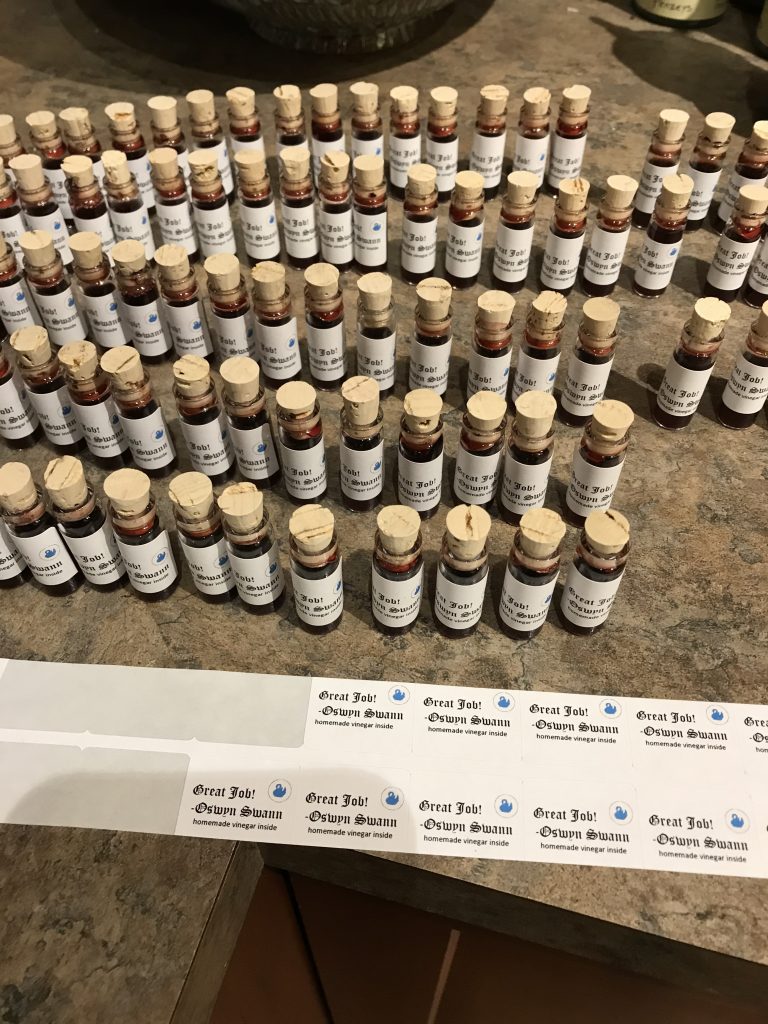
These are my new favor tokens. They are 1/8 dram (~1 ml) glass vials filled with my Pinot Noir vinegar. There is a tiny label and I just got the wax sticks to seal the cork.

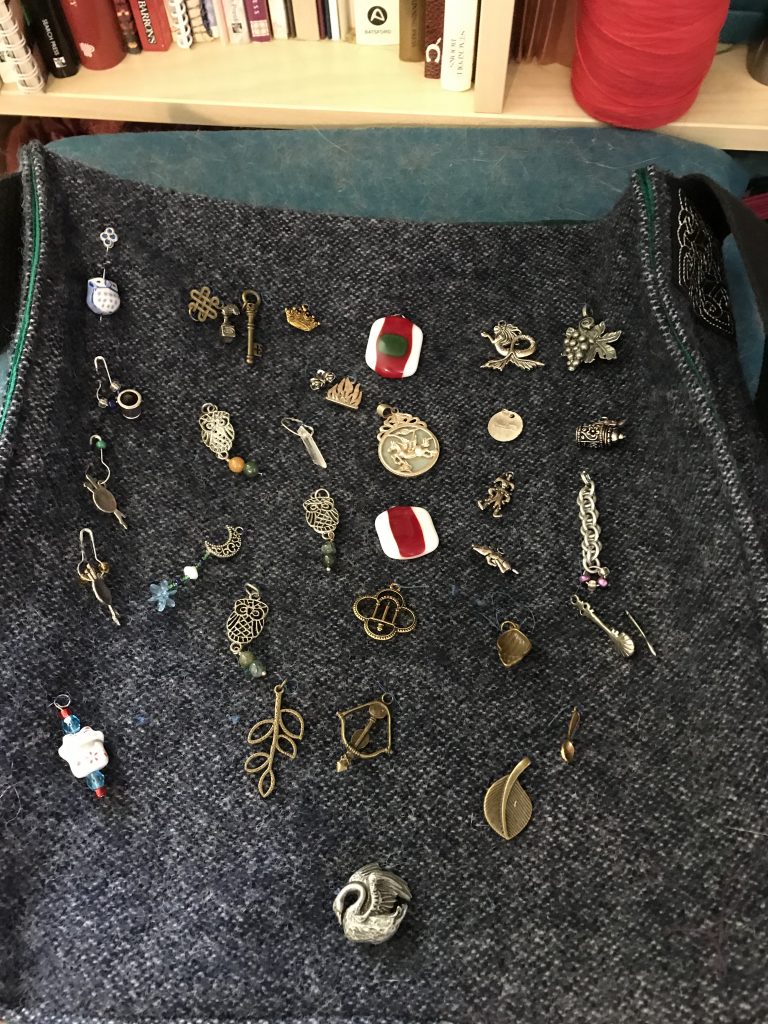
One of the things I wanted to do with the favors is make sure to say who the thanks is from. I have made favors which I have sewn to my shoulder bag. I don’t remember who gave me most of them. I wanted to make sure they whomever remembers who it is from. Unfortunately, the recipient will have be creative to attach it to something but it is not impossible.

My shoulder bag with favors attached.