
It was a long time in coming but I think we have the end. Below is the tri-fold display showing the journey.
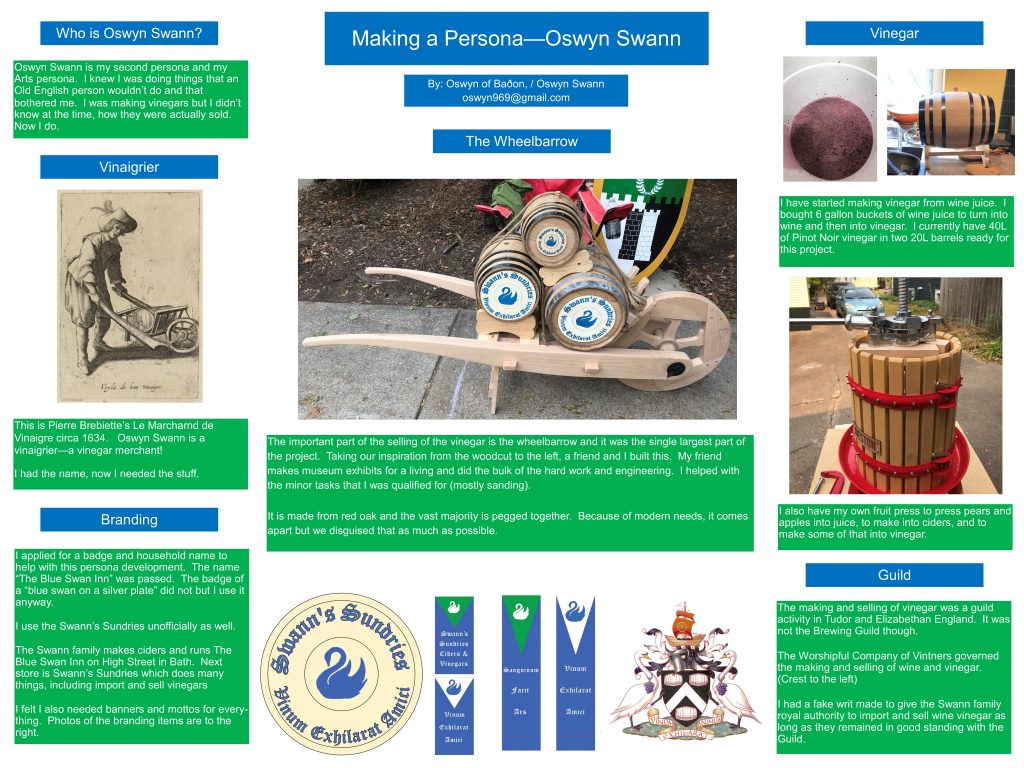
The center of this display shows the wheelbarrow completed. I am very proud of it.
I also found more woodcuts.
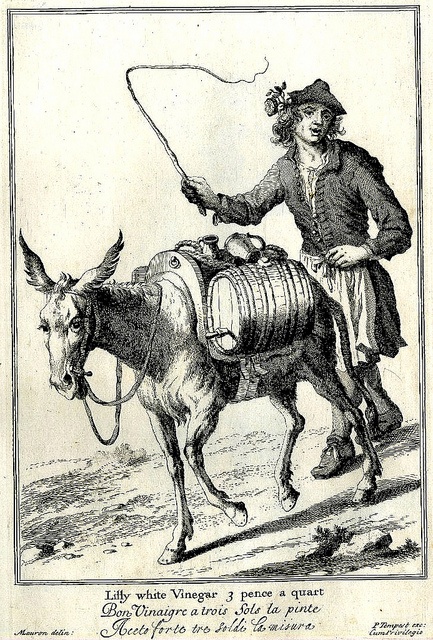
1688 from Cries of London 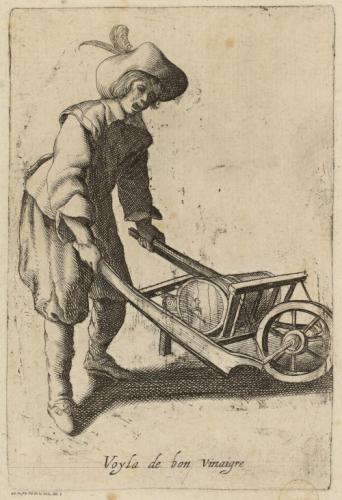
Brebiette ~1630 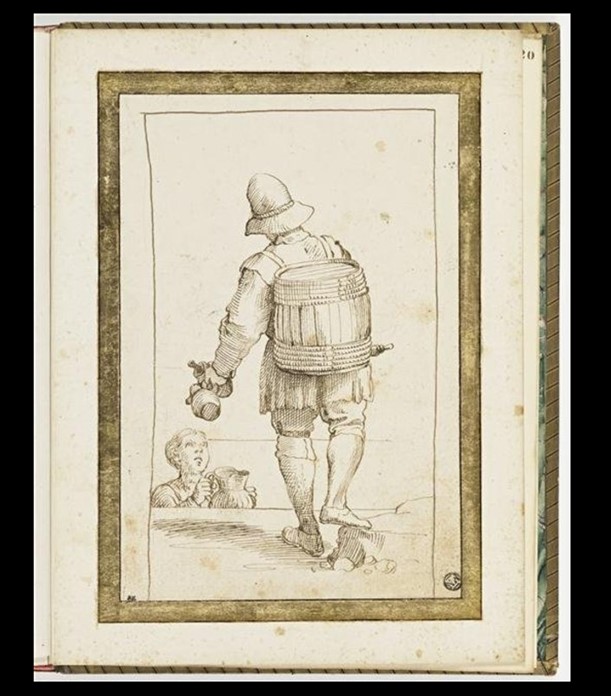
Marchard de vinaigre Carrache 1560-1609r 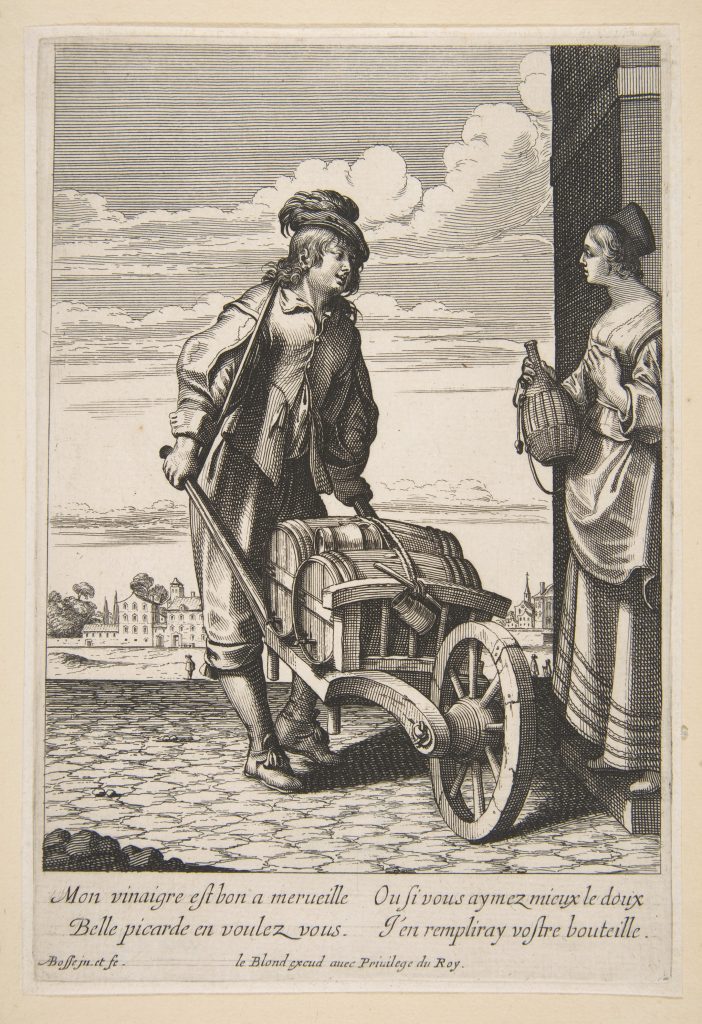
The Vinegar Merchant, Bosse mid 17th c. 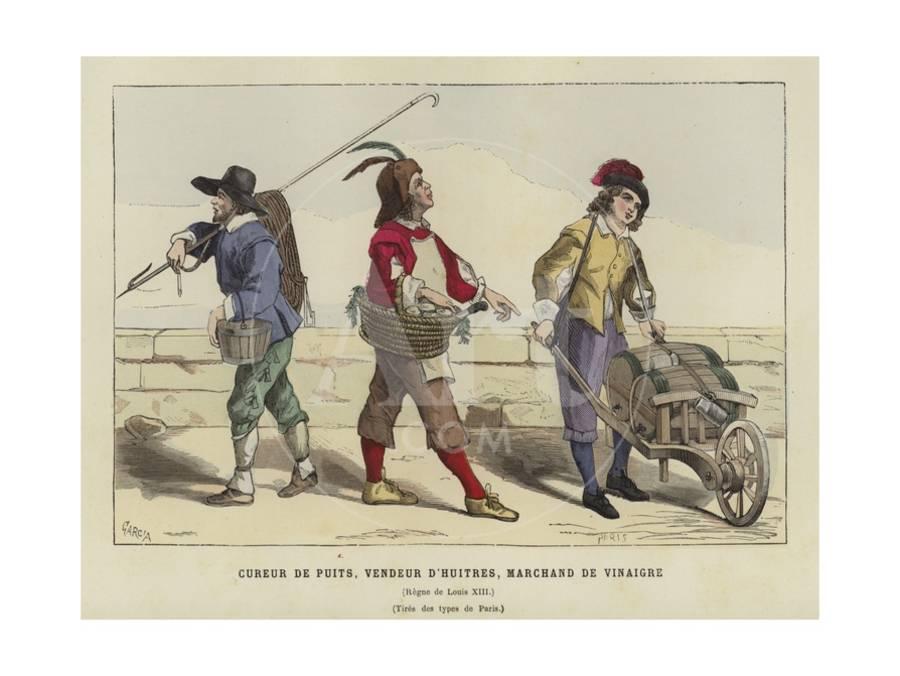
Various merchants, during Reign of Louis XIII 1601-1643 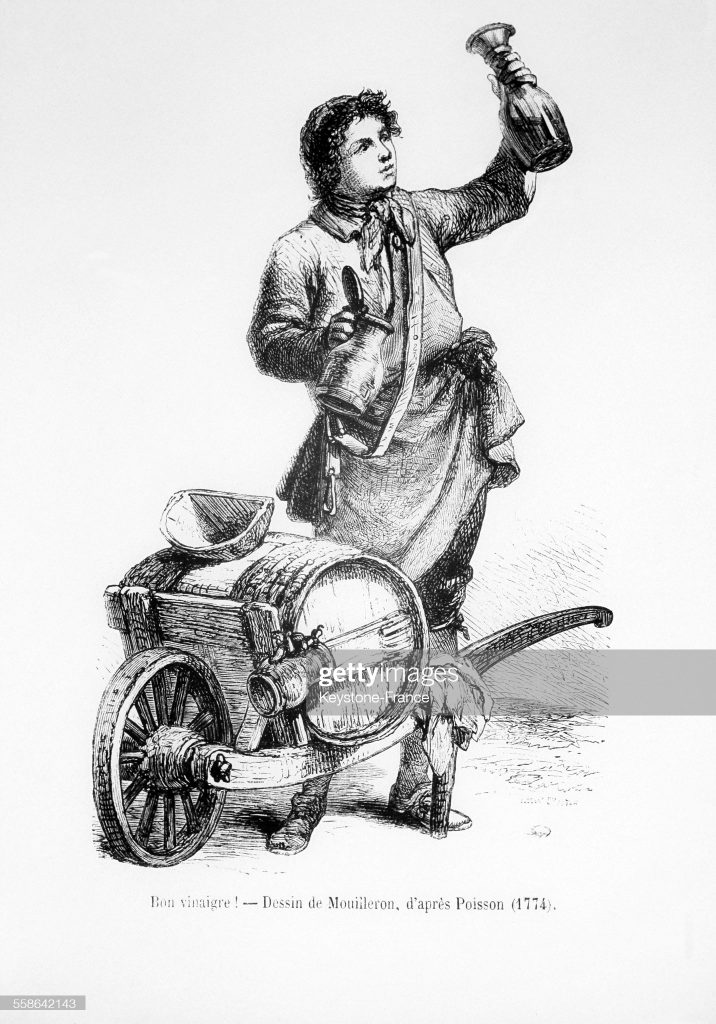
NON SPECIFIE – NON DATE: Reproduction du marchand de vinaigre intitule ‘Bon vinaigre!’ d’Adolphe Mouilleron d’apres Michel Poisson (1774). (Photo by Keystone-France\Gamma-Rapho via Getty Images) 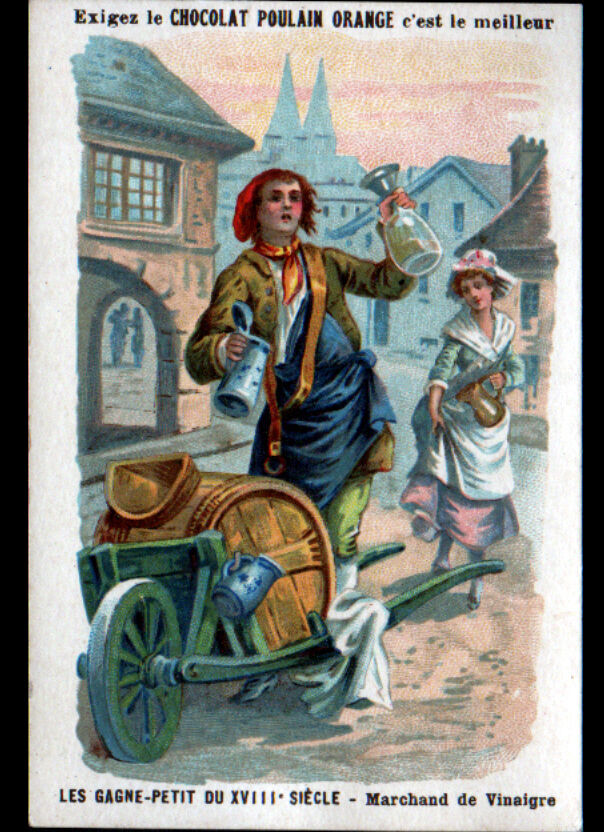
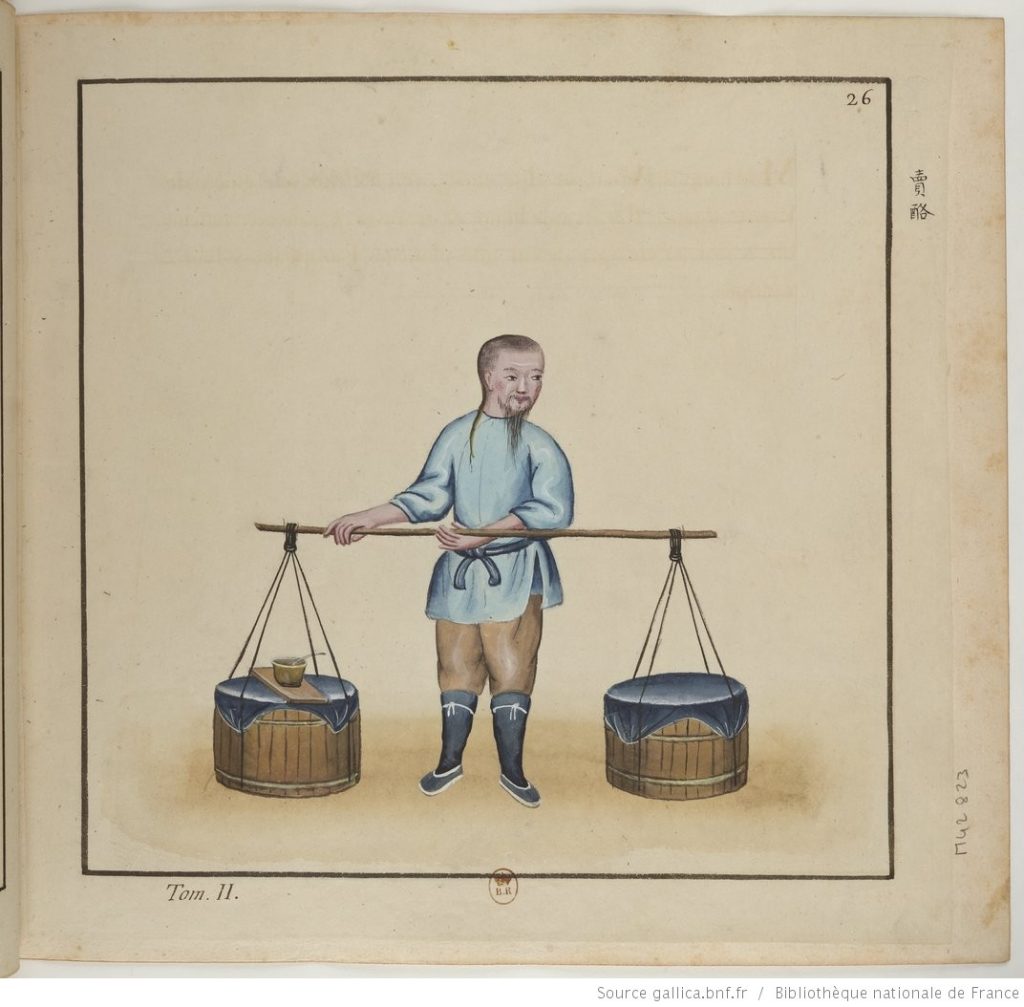
A FRENCH SKETCH OF A VINEGAR PEDDLER IN 19TH CENTURY BEIJING
I don’t think there is any doubt that vinegar sellers used wheelbarrows, especially near the end of period. I am not going to strap a barrel to my back though.
It was a heck of a journey to be inspired, proof, and create the things needed to show this period activity. How was vinegar sold? Good vinegar was imported from France, delivered to the ports of England, and then wheeled through the streets. You stopped the seller, filled your vessel, and he charged you the going rate.
According to The National Trust of the UK, imported vinegar from France would come in tuns (~252 gallon barrels). Wine from France ran ~3 pound per tun and vinegar was a bit cheaper. Using 3 pounds per tun, 252 gallons per tun, 240 pennies per pound, and modern equivalents, an ounce of imported vinegar would run about a 0.022 penny per ounce. The average maidservant made ~3 pounds per year. Imported vinegar was affordable but local vinegar from ciders or ales would have been much cheaper. (https://www.nationaltrust.org.uk/tudor-merchants-house/features/what-could-you-buy-at-the-tudor-merchants-shop).
For “selling” purposes, I will be canting, “vinegar, a ha’penny per pint!”
